

Stakeholder Capitalism: A Primer
Below you will find a history of stakeholder capitalism from its origins in the 1940s to 2026. This was first published in 2020 and has been updated periodically since then. For a more personal journey, click here for an EEA YouTube show conversation on stakeholder capitalism between Bruce Bolger, EEA Founder and R. Edward Freeman, Professor of Business Administration at the Darden School of the University of Virginia, author of the seminal work on the subject, Strategic Management: A Stakeholder Approach, first published in 1984 and still in print. For another perspective, see this show with Leo E. Strine, Jr., former Delaware Chief Justice, another pioneer and a strict advocate for keeping business out of politics and vice versa. Click here for a library of other YouTube shows related to stakeholder management. Click here for a library of stakeholder capitalism, human capital management resources and research on impact.
The state of people management today mirrors that of quality in manufacturing in the last century when US companies simply buried piles of waste into their bottom lines until pressure from the quality-conscious Japanese forced US automakers and others to change their ways. Today, change will be driven not only by competitive pressures but by the increasing ability of investors to evaluate the enormous waste in people management.
Many business leaders quietly believe there is a solution to the people problem that requires no sacrifices from shareholders or CEOs or intervention from government and which creates value and better experiences
 for everyone. Stakeholder capitalism is a growing worldwide reform movement dating back at least 70 years that focuses on enhancing returns for investors only by creating value for employees, customers, supply chain and distribution partners, communities and the environment. It is based on both research and common sense that organizations can do well by shareholders by harmonizing the interests of all stakeholders toward a common purpose, goals, objectives, and values. It should not be confused with "woke capitalism" or Corporate Social Responsibility (CSR), which often are the equivalent of "greenwashing." In fact, the virtue signaling and greenwashing associated with the term stakeholder capitalism in the early 2020s helped set back a practical business movement established by business innovators, management consultants and academics long before the concept of ESG (environmental, social, governmance) took shape. Because true stakeholder capitalist companies such as Costco, Delta, Nucor Steel, Texas Roadhouse, Chick Fil-A and others view its practice as a competitive advantage, they almost never brag about it.
 In decades of literature on the subject of stakeholder management, one won't find any advocating for organizations to address social or environmental issues outside of their core purpose, unless such issues are their purpose--except for a commitment to not offloading costs on to society in the form of mistreating customers, employees, distribution and supply chain partners, communities, or the environment. The moralizing arose in the early 2020s when leading companies embraced the term in corporate communications without any concrete action, fomenting skepticism and opposition from both the right and the left.
An analysis of the field's history below demonstrates that rather than an ideology, stakeholder capitalism is a management system, time-tested in total quality management practices around the world. With origins from some of the same thought leaders as total quality management, it is in this case applied to creating enhanced value from the 80% of the typical organization's balance sheet generally allocated to people in the balance sheet catch-all of "good will." Stakeholder management is designed to enhance both financial performance over time as well as experiences for all stakeholders, and there ample research demonstrating that organizations with highly engaged stakeholders often outperform their competitors in the marketplace. In fact, the analytics team at J.P. Morgan published an independent analysis of the Human Capital Factor (HCF), an analytics-based framework created by Irrational.Capital to predict enhanced future value creation. It confirms that organizations run with high HCF scores benefit from an alpha of at least 4% per year over market benchmarks. A recent study by the Said Business School at Oxford University on the impact of employee well-being on stock prices comes to a similar conclusion.
The field of stakeholder capitalism faces a fundamental challenge: the lack of a formal definition. Anticipating the difficulty of debating a field without a clear definition, the Enterprise Engagement Alliance in 2020 set out to create a formal definition that would reflect common usage in the nearly 70 years of literature in its stakeholder management library. In consultation with Alex Edmans, Professor of Finance at the London Business School, and Martin Whittaker, CEO, Just Capital, a New York-based stakeholder capitalism advocacy organization, it created this definition published in August 2020 in Forbes: "Enhancing returns for investors only by creating value for customers, employees, distribution and supply chain partners, communities, and the environment." This primer demonstrates the extent to which definitions can affect a debate.
Another fundamental reason why the field has failed to advance comes from the economist Milton Friedman: "If investing in employees increases long-term shareholder value, that's not corporate social responsibility—it's simply good management." The leading proponents almost never publicize their strategies and practices, as they view them as a competitive advantage.
The History
Stakeholder capitalism was not conceived of in 2019, as some believe, when the Business Roundtable updated its charter of the organization to address the needs of all stakeholders. Based on the timing of the announcement during a period of heightened social tensions, and with little sign of subsequent concrete action, the statement was viewed as little more than a press release and gave rise to a backlash from the right and the left.
In fact, stakeholder capitalism principles predate the Business Roundtable pronouncement by decades. The origins of the movement have nothing to do with corporatism, statism or Democratic Socialism, as claimed by opponents. In fact, it originated from practical business practices going back to the 1940s in the world of management consulting through the work of Peter Drucker as early as the late 1940s and by the total quality management legend W. Edwards Deming starting in the 1950s. In the 1960s, the Stanford Research Institute appears to have introduced the term stakeholders in its research. The World Economic Forum embraced the principles, in theory at least, upon its formation in 1973 with the Davos Manifesto, stating that companies should harmonize the interests of all stakeholders. The concept, framework and terminology was introduced into the academic arena in 1984 with the publication of Strategic Management: A Stakeholder Approach by R. Edward Freeman, a Professor of Administration at the Darden School at the University of Virginia. The book remains in print. The book does not advocate that businesses make donations to social causes. It argues that stakeholders are in fact the primary source of value creation for shareholders and that the best organizations harmonize the interests of all stakeholders toward a common purpose.
Since the publication of Freeman's book, the principles have gradually gained ground.
- In the early 1980s, Costco and Whole Foods, two early practitioners of stakeholder capitalism were founded. Herbert Kelleher took over Southwest Airlines in that period leading with a people-first strategy.
- In 1987, the Malcolm Baldrige Quality Award was created by Congress to recognize organizations demonstrating exceptional results through leadership, strategic planning, customer focus, workforce engagement, operations excellence, measurement and analysis, and continuous improvement, the basic principles of stakeholder capitalism.
- In 2004, over a dozen investment firms created the United Nations report, Who Cares Wins, helped coin the term ESG. The work focuses on how organizations can enhance value and capitalism through sustainable practices, with no talk of contributing organizational resources to social causes.
- Conscious Capitalism, one of the earliest proponents, founded in 2007, by John Mackey of Whole Foods fame, continues to quietly grow, with chapters around the world.
- B Lab, another early adocate founded in 2007, now has over 10,000 companies certified in its stakeholder capitalism principles worldwide.
- In 2010, the academic Stakeholder Strategy Interest Group was founded in the Strategic Management Society, an international group of professors.
- The Shared Values movement officially founded in 2011, has many worldwide proponents.
- The International Organization for Standardization has embedded stakeholder capitalism principles in all of its process management standards, starting in 2012.
- The influential JUST Capital advocacy group founded in 2014 by hedge fund investor Paul Tudor Jones II, has created a benchmarking service for top companies and helped found the JUST Capital ETF managed by Goldman Sachs.
- The Embankment Project founded in 2016 by the Rothschild family, EY, and others, which is now the Coalition for Inclusive Capitalism, remains in operation with support from the Vatican.
- In 2018, Sen. Elizabeth Warren, Sen., Mass., introduced the Accountable Capitalism Act, which would add new disclosure requirements and management commitments. It was dead on arrival with widespread opposition on the right.
- In 2019, the Business Roundtable updated its charter to pledge that member companies commit to leading their companies for the benefit of all stakeholders — customers, employees, suppliers, communities and shareholders. It spawned a controversy that arguably set stakeholder capitalism back by five years.
- The Economics of Mutuality Foundation, a group formed by the Mars family in 2020, has created an investment fund to support stakeholder-oriented companies, and another group to support education outreach activities.
On the other side of the debate, governors in Texas, Florida, Louisiana, and other states have drawn attention to stakeholder capitalism through their proposed measures to curtail state pension funds from investments that promote or support ESG (Environmental, Social, Governance) practices, often associated with stakeholder capitalism. Nineteen states formed a coalition to oppose ESG investing. Sen. Pat Toomey, R., PA., made news by requesting detailed information of standards from more than a dozen ESG ratings firms. Writing in opposition to stakeholder capitalism in multiple publications and cable media platforms, a former health care entrepreneur, asset manager, and former Republican presidential candidate Vivek Ramaswamy, now candidate for Ohio governor, has written, without reference to any formal definition, that “stakeholder capitalism refers—or at least used to refer—to the idea that companies should serve not just their shareholders, but also other societal interests."
 For those following the topic of stakeholder capitalism as of mid-2026, there remains talk of stakeholder capitalism in some business circles, but ask the average business person or American citizen if he or she has heard of it, and the usual response is "no," "sort of" or "maybe." Despite references to stakeholder capitalism in the New York Times, Fortune, Forbes, the Economist, Financial Times, and on CNBC, Fox News, in some academic journals, the debate around stakeholder capitalism rests largely below the public radar. While President Trump has rarely if ever mentioned the term, the tenor of the new administration regarding ESH has cast a pall on any use of the phrase, even if companies committed to its principles, such as Costco, Delta Airlines, Wegman's, Nucor Steel, etc., remain committed to the principles. After the second Trump administration began, Tthe term vanished from the web site of the Conference Board, a leading business organization, that at one point dedicated a learning center to the field.
The financial publication Barron's, with its 100 Most Sustainable Companies annual report, had also become a major advocate, has ceased publication. The early interest in academia starting in the early 2020s has faded. The Kenan Institute of Private Enterprise, on the campus of the University of North Carolina, dedicated the year 2022 to the topic of stakeholder capitalism and held an annual conference on the subject in January 2023: "The Promise and Perils of Stakeholder Capitalism." It has since appeared to have gone silent. Similarly, the Yale School of Management's Forum for Stakeholder Innovation and Management, appears to have slipped under the radar screen.
The Case Against Stakeholder Capitalism
Almost all the fervent opposition, notably from the Heritage Foundation and related organizations, is based on the concern that stakeholder capitalism is creeping statism and corporatism or an attempt by large investment firms and corporations to impose their social views on businesses about society and the environment, thereby imposing higher costs and lower returns for investors. This is the basis for opposition to pension fund investments in ESG-oriented funds. The problem is that there is little basis in the literature or practice of stakeholder capitalism--other than a few press releases--that the actual theory and practice of stakeholder capitalism has anything to do with diverting profits to the pet interests of CEOs.
In fact, stakeholder capitalism advocates would argue, what Denning writes better describes the current state at most organizations: an ad hoc, reactive approach to trading off the needs of stakeholders rather than one that is strategic and proactive based on establising a common organizatizational purpose. Stakeholder capitalism is not about focusing on the needs of addressing all stakeholders, as Harvard Law School professors also wrote in a Harvard Law School blog, its about harmonizing the interests of all stakeholders whose engagement is required to achieve sustainable organizational results for shareholders.
Even opponents of stakeholder capitalism have agreed with the principles of the EEA's definition. Wayne Wingarden,Senior Fellow and Director Center for Medical Economics and Innovation at Pacific Research Institute, said he agrees with the business management principles of the EEA definition of stakeholder capitalism and that helping organizations implement them could be a profitable business for management advisors “with skin in the game.” He has two objections to the EEA definition. He believes it is inconsistent with what believes is established usage. “Most people who use the term are not using it in the manner you describe.” He was not hopeful that the Enterprise Engagement Alliance definition could change that trajectory with its own definition. “There’s really nothing new. It’s just good business practice. For the academic world, it’s not a new economic discipline or theory.”
When questioned in an email with Lucian Bebchuk, co-author of "The Illusory Promise of Stakeholder Capitalism," he wrote that the EEA's definition was simply good business and nothing new.
Recently, an executive of the Heritage Foundation, in an off-the-record e-mail exchange, said that the term stakeholder capitalism was permanently tarnished. "Why don't you just call it good capitalism?" he suggested.
return to top]
The Case for "Good" Capitalism
The EEA does not contest the case of opponents to stakeholder capitalism, especially because opponents supports the EEA's definition. We contest the definition used by the opposition. If organizations are indeed guilty of green washing, virtue signaling, or of trying to collude against the interests of investors to promote left- or right-wing causes, we oppose that too. Our case rests on the authentic origins of stakeholder capitalism rather than on a definition fabricated based on little more than several press releases. If indeed stakeholder capitalism is good capitalism, the focus should be on implementation, not nomenclature debates.As outlined above, the EEA contends that stakeholder capitalism has its roots in the work of Peter Drucker, W. Edwards Deming, the World Economic Federation, the work of R. Edward Freeman and other academics, and the practices of thousands of companies around the world.
While stakeholder capitalism can involve worker ownership through Employee Stock Ownership Plans, if business principals so desire, stakeholder capitalism is not to be confused with socialism. It is purely voluntary, other than disclosures required of European union disclosure laws.
This is consistent with the quality people management principles of the International Organization for Standardization Annex SL standards published in 2012, and embodied in later ISO 10018 people engagement standards published in 2015 and updated in 2020. The principles appear in a Wikipedia definition for Enterprise Engagement published in 2009. These basic principles are now embedded in over 60 ISO business management standards, including the widely followed ISO 9001 quality management standards: the need for the CEO to lead a strategic and systematic approach to achieving the goals of any business practice or standard by involving and addressing the needs of all stakeholders. The focus is on achieving goals with the support of all stakeholders, not on hoping that by focusing on all stakeholders, performance will follow. This is another critical distinction.
Based on the same holistic processes that are at the roots of total quality management in manufacturing and engineering, to proponents, stakeholder capitalism is not about favoring some stakeholders over shareholders, or pitting one stakeholder against another, as critics define it, but about aligning or harmonizing their interests to grow the pie for the benefit of all, as Professor Alex Edmans of the London Business School describes it in his book, Grow the Pie, Stakeholder capitalism has nothing to do with politics, left or right, nor with socialism, because government involvement is not required. It's about a people-focused path to sustainable profitability. Almost all Americans, and citizens of most countries, probably agree that they would rather work for, do business with, invest in, or have organizations located in their communities that value all their people, but it's also better for shareholders. In fact, Edmans asserts in a article that the arguments against ESG and stakeholder capitalism are moot, since it's simply another approach to value creation.
When implemented as part of a strategic and systematic process, investing in people has a clear return-on-investment. In 2022, the Barron's List of Sustainable Companies outperformed the stock market for the fourth year in a row. Similarly, the JUST Capital ETF, managed by Goldman Sachs had outperformed the Russell 1000 benchmark. It tracks companies based on the priorities of Americans surveyed annually on their priorites, which include: workers, prosperity, and the planet. Both funds are following a similar trajectory as the six-year Enterprise Engagement Alliance Engaged Company Stock Index study conducted by McBassi & Co., publisher of Good Company. Between 2012 and 2018, when the study was ended, the ECSI outperformed the S&P 500 by over 37%. The ECSI tracked the stocks of about 40 companies with high levels of customer, employee, and community engagement using metrics from 13 independent sources. Alex Edmans, the Grow the Pie author, shares his research of "100 Best Places to Work" companies and found they consistently outperformed market returns over more than two decades. His findings recently were confirmed by other researchers. Click here for a library of other research studies on the return-on-investment of stakeholder management principles.
More recently, as outlined above, the analytics team at J.P. Morgan published an independent analysis of the Human Capital Factor (HCF), an analytics-based framework created by Irrational.Capital and a study by Said Business School at Oxford University identify a clear connection between engaged employees and financial outcomes.
It is just good capitalism. Terrence Keeley of 1PointSix, an ESG advisory firm, writing in an October 2022 Fortune article, quotes a conversation with Milton Freidman in which the economist says that he unhesitatingly agrees with the concept of Conscious Capitalism as espoused by John Mackey, Whole Foods Founder. “The differences between (us) regarding the social responsibility of business are rhetorical. Strip off all the camouflage and it turns out we are in essential agreement.” In fact, Freidman is specific in his 1970 New York Times magazine article stating that the corporate responsibility of a company is to make money ehtically. Is it ethical to offload or "externalize" on to society the costs of underpaying people, misleading consumers, leaving abandoned buildings, or polluting the air and water, or discriminating against people?
Ironically, many Republicans have supported stakeholder capitalism principles by signing into law in their states statutes for "public benefits corporations". Unlike traditional organizations, "whose primary interest is maximizing shareholder value, public benefit corporations balance stakeholders' pecuniary interests with the interests of those who are involved and affected by the corporation, such as employees and customers, as well as the advancement of their intended public benefit goal," according to a definition from Cornell Law School, which closely aligns with the general definition of stakeholder capitalism. In fact, 19 Republicans, including Mike Pence, Sam Brownback, Rick Scott, and Nikki Haley all signed into law such statutes in Red states, along with 17 Democrats and one Libertarian in Blue states.
Even prominent shareholder capitalists and conservatives have shifted their views. In the documentary "Fishing With Dynamite," Michael C. Jensen, Professor Emeritus of Harvard Business School, since deceased, says: “Maximizing shareholder value is a stupid idea. Stop it! And it will impose costs on you, the person who’s trying to maximize the value.” He notes that all stakeholders need to be considered “with integrity,” and that the consequences didn’t occur to him and his coauthor at the time of his fame in business academic circles in the late 20th century. He does, however, accept blame, noting that “we’re all going to make mistakes.”
Arthur C. Brooks, a Harvard professor and social scientist agrees. “The best organizations, the best societies, the best-run companies, the healthiest families—what do they do? They look out for each other. They think about what everybody needs. That’s what going on in good organizations.”
[return to top]
The Contributors to Stakeholder Capitalism Principles
The people and organizations below are listed in an approximate timeline. Please note that there are too many CEOs who have practiced stakeholder capitalism principles over the decades to name, so we have highlighted a few of the most notable advocates. Few are known to have used that term as a way of describing their business practices.
Peter Drucker. popular 20th-century management consultant and business author whose set of tenets included a focus on “customer satisfaction, employee engagement and development, innovation, social responsibility and financial strength,” the foundational principles of Stakeholder Capitalism.
Stanford Research Institute (now SSRI.) Published a paper in 1963 that contains an early discussion of stakeholder thinking.
Tom Peters. His book, “In Search of Excellence,” also published in 1982, touted a leadership style based on the Seven S Framework, including: "Strategy, Structure and Systems, and Staff, Style, Shared Values and Skills."
R. Edward Freeman. His book, "Strategic Management: A Stakeholder Approach," promoted the benefits of addressing the needs of all stakeholders, a concept that came to be known as Stakeholder Theory.
Charles Handy. As represented in his recent New York Times obituary, he entered the public arena in the 1980s advocating for a more humanistic capitalism.
United Nations Global Impact "Who Cares Wins" Study, published in 2004, which advocates for investors, company, and regulators to address environmental, social, and governance factors in their investments and business practices.
John Mackay and Conscious Capitalism. The founder of Whole Foods built its success on the principals of stakeholder capitalism displayed throughout each location in word and image.
The Forum for People Performance Management and Measurement, a research group at the Medill School of Marketing Communications from 2001-2009, that undertook multiple research studies indicating the link between customer and employee engagement and financial results.
B-Lab. An organization that audits and certifies sustainable companies, founded in 2007. It helped promote the establishment of public benefits corporations in the US and abroad.
Shared Values Movement formally founded in 2011 by Michael Porter and Mark Kramer.
First organizations publish ISO 30414 Human Capital standards conforming human capital reports. Starting in 2020, companies in Europe began publishing human capital reports verified by independent third parties. Click here for examples.
European Union Corporate Sustainability Reporting Directive of January 2023 mandates an unprecedented level of stakeholder management disclosures with audited practices and metrics of companies with more than 250 employees or about $44 million in annual sales in the EU.
The Human Capital Factor. An analytics-based framework is developed by Irrational Capital for predicting enhanced future value equity through effective people management independently verified by J.P. Morgan to create an alpha of at least 4% over benchmarks when effectively implemented.
- Founded in 2008, the Enterprise Engagement Alliance provides outreach, learning and certification in Enterprise Engagement, an implementation process for the “S” or Social of Stakeholder Capitalism and Human Capital Management and measurement of engagement across the organization.
- The Enterprise Engagement Alliance provides a training and certification program for business leaders, practitioners, and solution providers, as well as executive briefings and human capital gap analyses for senior leaders.
- The EEA produces an education program for CFOs for the CFO.University training program on Human Capital Management.
- Join the EEA to become a leader in the implementation of the “S” of ESG and Stakeholder Capitalism.
Engagement Digital Media and Marketplaces- The ESM information portal and The Enterprise Engagement Advisors Network solution provider marketplace cover all aspects of stakeholder engagement, and the EEA information library lists dozens of resources.
- The RRN information portal and Brand Media Coalition marketplace address the use of brands for gifting, incentives, recognition, and promotions. The BMC information library provides information and research resources.
 Books
Books- Enterprise Engagement for CEOs: The Little Blue Book for People-Centric Capitalists. A quick guide for CEOs.
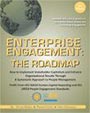
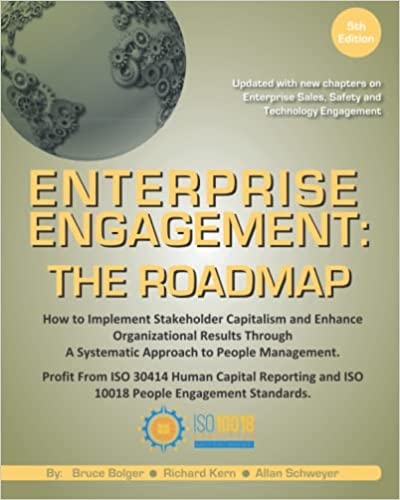
- Enterprise Engagement: The Roadmap 5th Edition implementation guide. A comprehensive textbook for practitioners, academics, and students.
- Organizations of all types develop strategic Stakeholder Capitalism and Enterprise Engagement processes and human capital management and reporting strategies; conduct human capital gap analyses; design and implement strategic human capital management and reporting plans that address DEI (Diversity, Equity, and Inclusion), and assist with managed outsourcing of engagement products and services.
- Human resources, sales and marketing solution providers profit from the emerging discipline of human capital management and ROI of engagement through training and marketing services.
- Investors make sense of human capital reporting by public companies.
- Buyers and sellers of companies in the engagement space or business owners or buyers who seek to account for human capital in their mergers and acquistions.