

How Marketing Agencies Can Build an Enterprise Engagement Practice--A Strategic Roadmap for Entering the Next Growth Market
 With only about 50 incentive, recognition, and loyalty companies in the world, the opportunities are rife for marketing agencies with deep client relationships to tap what is largely a do-it-yourself business—fostering the proactive involvement of all stakeholders toward a common purpose, goals, objectives and values.
The Next Strategic Frontier for Agencies?
Begin With a Clear Definition and Point of View
Expand the Agency Lens Beyond External Marketing
Develop an Engagement Strategy Offering Before Technology or Rewards
Build Capability in Engagement Technology Ecosystems
Create a Cross-Functional Engagement Team Model
Shift Measurement From Activity Metrics to Business Outcomes
Start With Existing Clients and Adjacent Needs
Build Recurring Engagement Management Relationships
Position the Practice as Enterprise Value Creation, Not Marketing Services
Click here to subscribe to the ESM weekly e-newsletter.
As enterprise engagement emerges as a formal discipline focused on aligning all stakeholders around purpose, values, and measurable organizational goals, marketing and advertising agencies are uniquely positioned to play a leadership role. However, entering the enterprise engagement marketplace requires more than repackaging recognition programs or extending campaign services. It requires building a structured practice grounded in enterprise-wide strategy, enabling technology, and outcome-based measurement.
For agencies seeking sustainable differentiation and new growth, the question is no longer whether enterprise engagement represents an opportunity, but how to develop the capabilities to deliver it. The good news, the cost of entering the market is minimal because there are readily available technologies and the practices are available online through organizations like the Enterprise Engagement Alliance.
The Next Strategic Frontier for Agencies?
Enterprise engagement represents a major market shift: from fragmented incentives and communications to integrated systems that engage all stakeholders in measurable ways. Agencies have a rare advantage. They already own the core competencies most traditional incentive providers lack:
- Enterprise storytelling
- Communications orchestration
- Brand and purpose activation
- Behavioral influence
- Integrated technology experience
- Performance-driven measurement
Begin With a Clear Definition and Point of View
The first step in building an enterprise engagement practice is establishing clarity about what enterprise engagement is—and what it is not. Enterprise engagement is not simply:
- Employee recognition
- Incentives and rewards
- Internal communications
- Customer loyalty programs
- Culture campaigns
Expand the Agency Lens Beyond External Marketing
Traditional agency models focus primarily on customers and marketplace behavior. Enterprise engagement requires agencies to design for a broader ecosystem that includes:
- Employees at all levels
- Sales and non-sales contributors
- Channel and distribution partners
- Suppliers and strategic vendors
- Customer communities and advocates
This expansion creates new relevance for agencies at the executive level, particularly with CEOs, corporate communications and investor relations teams, marketing executives CHROs, and chief commercial officers.
Develop an Engagement Strategy Offering Before Technology or Rewards
Many engagement providers have historically led with platforms or incentives. Agencies can differentiate by leading with strategy first. A credible enterprise engagement practice should begin with consultative offerings such as:
- Enterprise engagement assessments
- Stakeholder alignment audits
- Engagement journey mapping
- Purpose and values activation strategy
- Measurement and impact framework design
Build Capability in Engagement Technology Ecosystems
Enterprise engagement is increasingly enabled by integrated enterprise engagement technology platforms that unify:
- Communications
- Learning and development
- Recognition and incentives
- Feedback and listening systems
- Collaboration and community features
- Analytics and impact measurement
Technology fluency is essential because enterprise engagement is moving from standalone programs to enterprise-wide infrastructure.
Create a Cross-Functional Engagement Team Model
Enterprise engagement cannot be delivered through creative and account services alone.
Agencies building a practice should establish interdisciplinary teams that combine:
- Engagement strategists
- Communications and content leaders to build relationships with permission-based communications
- Behavioral and cultural insight expertise
- Learning and performance design
- Data and measurement specialists
- technology integration capabilities
Shift Measurement From Activity Metrics to Business Outcomes
One of the most important differentiators agencies can bring is outcome-based measurement. Traditional recognition programs often report participation statistics, such as:
- Redemptions
- Points issued
- Program usage
- Retention and turnover reduction
- Productivity improvements
- Customer loyalty and advocacy
- Partner performance
- Sales growth
- Alignment with organizational purpose
Start With Existing Clients and Adjacent Needs
Agencies do not need to build enterprise engagement practices from scratch. The most effective entry point is through existing client challenges, such as:
- Declining employee or customer engagement
- Inconsistent culture across regions
- Channel partner underperformance
- Fragmented loyalty and incentive efforts
- Lack of alignment around purpose and strategy
Build Recurring Engagement Management Relationships
Enterprise engagement is not campaign-based. It is continuous. Agencies should design their practice around long-term engagement management models, including:
- Ongoing communications and content operations
- Selection and management of enterprise engagement technology
- Continuous measurement and optimization
- Stakeholder feedback cycles
- Program evolution aligned with business strategy
Position the Practice as Enterprise Value Creation, Not Marketing Services
Finally, agencies must position enterprise engagement appropriately. This is not an extension of advertising. It is a strategic business discipline that directly supports organizational performance, workforce alignment, customer commitment, and partner productivity. Agencies that successfully build enterprise engagement practices will evolve from marketing vendors into enterprise-wide growth and performance partners.
Enterprise Engagement Alliance Services
 Celebrating our 17th year, the Enterprise Engagement Alliance helps organizations enhance performance through:
1. Information and marketing opportunities on stakeholder management and total rewards:
- ESM Weekly on stakeholder management since 2009. Click here to subscribe; click here for media kit.
- RRN Weekly on total rewards since 1996. Click here to subscribe; click here for media kit.
- EEA YouTube channel on enterprise engagement, human capital, and total rewards since 2020
 Management Academy to enhance future equity value for your organization.
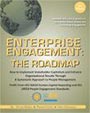
3. Books on implementation: Enterprise Engagement for CEOs and Enterprise Engagement: The Roadmap.
4. Advisory services and research: Strategic guidance, learning and certification on stakeholder management, measurement, metrics, and corporate sustainability reporting.
5. Permission-based targeted business development to identify and build relationships with the people most likely to buy.
Contact: Bruce Bolger at TheICEE.org; 914-591-7600, ext. 230.