

The Missing Link in Engagement: Why Connecting Employee and Customer Experience Is the Key to Measurable Impact
 A growing body of evidence shows that organizations that connect employee experience (EX) and customer experience (CX) outperform those that treat them separately. Yet many companies still struggle to translate engagement metrics into financial outcomes. This recent EEA YouTube show examines why the EX–CX connection matters, how organizations can promote and measure its economic impact, and what practical steps leaders can take to turn engagement insights into measurable business performance. Click here to watch and/or listen to the show.
Why the EX–CX Connection Matters
Why Many Organizations Struggle to Measure Impact
What Data Is Needed to Make the Connection
Moving From Dashboards to Impact
Effective Practices for Linking EX and CX
Click here to subscribe to the ESM weekly e-newsletter.
For years, organizations have invested heavily in customer experience initiatives and employee engagement programs. But too often those efforts operate in parallel rather than in partnership. Research increasingly shows that engaged employees create better customer experiences—and that the companies that align the two are more likely to see stronger sales growth, loyalty, and profitability. The challenge is measurement and integration: how do organizations connect employee and customer data, and how do they prove the financial value of doing so?
In this EEA YouTube show, Brad Christian, Chief Commercial Officer, Experience Group, Ipsos and Rick Garlick, PhD,Consulting Partner, BBV Ipsos explore the economics of engagement and outline practical ways companies can move from isolated dashboards to integrated systems that link experience to financial performance.
Click here to watch and/or listen to the show.
Why the EX–CX Connection Matters
Christian and Garlick emphasize that employee and customer experiences are deeply interconnected. Employees are the primary drivers of how a brand is delivered in the real world—especially in service, retail, and digital environments where human interaction shapes perception.
Organizations that measure EX and CX separately often miss the causal relationship between the two. When frontline employees are empowered, trained, and motivated, customer interactions tend to be more effective, more authentic, and more consistent.
Research across industries shows that companies that successfully link employee engagement with customer experience metrics are more likely to see improvements in:
- Customer loyalty and retention
- Net Promoter and satisfaction scores
- Sales conversion and revenue growth
- Operational efficiency and reduced churn
Why Many Organizations Struggle to Measure Impact
Despite the evidence, many organizations still find it difficult to connect engagement metrics to financial performance. According to Christian and Garlick, the biggest barriers are structural.
First, data lives in silos. HR tracks employee engagement. Marketing or CX teams track customer sentiment. Finance tracks revenue. Without integration, leaders cannot easily see cause-and-effect relationships.
Second, metrics are often disconnected from outcomes. Companies may track engagement scores, satisfaction surveys, or digital analytics without linking them to operational results such as sales, retention, or productivity.
Third, insight rarely reaches action. Dashboards and reports proliferate, but they do not always translate into operational changes that improve employee or customer experience.
What Data Is Needed to Make the Connection
Christian and Garlick contend that organizations must shift toward integrated measurement systems that combine operational, experience, and financial data. Key data sources include:
- Employee engagement surveys and frontline feedback
- Customer satisfaction and loyalty metrics
- Operational data such as wait times, service levels, and conversion rates
- Financial performance metrics tied to locations, teams, or digital channels
Moving From Dashboards to Impact
The goal is not simply more data, but actionable insights. Effective organizations use integrated measurement systems to identify the specific employee behaviors and operational practices that most strongly influence customer outcomes. These insights can then guide leadership decisions about training, staffing, incentives, and process improvements.
Rather than tracking engagement as an abstract score, companies begin to understand which elements of employee experience most directly influence customer loyalty and profitability.
Effective Practices for Linking EX and CX
Christian and Garlick highlight several practices that help organizations make the EX–CX connection real.
1. Align leadership around shared outcomes. EX and CX initiatives should not operate independently. Leaders should align teams around common goals such as customer loyalty, retention, and revenue growth.
2. Integrate measurement systems. Combine employee, customer, operational, and financial data into unified analytics platforms that reveal relationships across the business.
3. Focus on frontline drivers of experience. Identify the employee behaviors, training programs, and operational conditions that most strongly influence customer satisfaction, promote them and effectively reward them.
4. Close the loop between insight and action. Measurement should drive continuous improvement—not simply reporting.
The value of getting It right. Organizations that successfully connect employee and customer experience gain a powerful advantage. They move beyond intuition toward measurable systems that link engagement to business performance. That shift allows leaders to answer the question many executives still ask: Does engagement drive profitability?
According to Christian and Garlick, the answer is increasingly clear. The organizations that measure—and manage—the EX–CX connection are the ones most likely to turn experience into measurable economic impact.
Enterprise Engagement Alliance Services
 Celebrating our 17th year, the Enterprise Engagement Alliance helps organizations enhance performance through:
1. Information and marketing opportunities on stakeholder management and total rewards:
- ESM Weekly on stakeholder management since 2009. Click here to subscribe; click here for media kit.
- RRN Weekly on total rewards since 1996. Click here to subscribe; click here for media kit.
- EEA YouTube channel on enterprise engagement, human capital, and total rewards since 2020
 Management Academy to enhance future equity value for your organization.
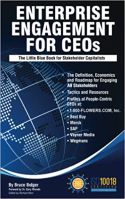
3. Books on implementation: Enterprise Engagement for CEOs and Enterprise Engagement: The Roadmap.
4. Advisory services and research: Strategic guidance, learning and certification on stakeholder management, measurement, metrics, and corporate sustainability reporting.
5. Permission-based targeted business development to identify and build relationships with the people most likely to buy.
Contact: Bruce Bolger at TheICEE.org; 914-591-7600, ext. 230.