

How to Make Employee Ownership Truly Work
Key Recommendations for Engaging Employees
What’s Necessary to Make These Practices Work
The Business Impact
Click here to subscribe to the ESM weekly e-newsletter.
Employee ownership can unlock engagement and drive performance only when it’s paired with disciplined management practices that make ownership real and actionable for every employee. This research — based on four years studying companies that extended equity broadly — identifies three core practices that transform ownership from a slogan into a culture of accountability, motivation, and results.
 In other words, employee ownership is not enough to engage people, according to this recent Harvard Business Review article, “The Management Practices That Make Employee Ownership Pay,” by Ethan Rouen, an Assistant Professor at Harvard Business School and faculty co-chair of the Impact-Weighted Accounts Project; Leigh M. Weiss, an executive advisor to KKR, senior advisor to Ownership Works, and a former McKinsey senior expert.
Despite decades of stagnating engagement scores in US workplaces, many leadership teams still rely on rhetoric about “ownership culture” to inspire performance. But financial ownership alone — giving employees equity — doesn’t automatically create engagement or business impact. The authors argue that without intentional management practices, ownership can remain abstract and fail to influence how people think, feel, and behave.
Employee ownership is not a silver bullet, the authors assert. It's full potential emerges only when companies pair broad-based equity with disciplined transparency, empathetic leadership, and quantitative culture management. These practices unlock engagement by making work meaningful, measurable, and tied directly to business outcomes.
Key Recommendations for Engaging Employees
1. Pair broad-based equity with financial transparency. True ownership requires a clear line of sight from day-to-day work to company performance and personal outcomes. Leaders must:
- Share financial results in understandable ways.
- Explain how individual actions influence outcomes like revenue, margins, and eventual payouts.
- Invest in financial literacy for employees so they can interpret performance data and make informed decisions.
.png) 2. Build an empathetic leadership mindset. Ownership cultures flourish under leaders who listen, understand worker perspectives, and build trust. This means:
2. Build an empathetic leadership mindset. Ownership cultures flourish under leaders who listen, understand worker perspectives, and build trust. This means:- Demonstrating empathy consistently — not just during surveys or feedback sessions.
- Creating environments where employees feel safe sharing ideas and concerns.
- Training leaders not just to manage performance metrics but to relate to the workforce.
3. Measure culture with the same rigor as finances. Top-performing companies don’t treat culture as a “soft” initiative — they quantify it:
- Use dashboards to track metrics like engagement, turnover, safety, and early-tenure churn.
- Diagnose root causes with data rather than anecdotes.
- Adjust systems and processes based on evidence, not instinct.
What’s Necessary to Make These Practices Work
These recommendations require more than goodwill:
- Leadership commitment to transparency — meaning leaders must share not just results but context, implications, and trade-offs.
- A shift in communication norms — translating financials and strategic goals into everyday language that front-line employees can act upon.
- Investment in systems and tools that capture and analyze people data like any other business metric.
The Business Impact
Rouen and Weiss note that when financial ownership is paired with these practices, the payoff is mutual:
- Companies see stronger retention and engagement.
- Operational improvements follow— from margin expansion to lower attrition.
- Early evidence indicates that deals with effective ownership programs have achieved returns well above market medians.
Enterprise Engagement Alliance Services
 Celebrating our 17th year, the Enterprise Engagement Alliance helps organizations enhance performance through:
1. Information and marketing opportunities on stakeholder management and total rewards:
- ESM Weekly on stakeholder management since 2009. Click here to subscribe; click here for media kit.
- RRN Weekly on total rewards since 1996. Click here to subscribe; click here for media kit.
- EEA YouTube channel on enterprise engagement, human capital, and total rewards since 2020
 Management Academy to enhance future equity value for your organization.
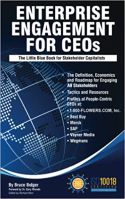
3. Books on implementation: Enterprise Engagement for CEOs and Enterprise Engagement: The Roadmap.
4. Advisory services and research: Strategic guidance, learning and certification on stakeholder management, measurement, metrics, and corporate sustainability reporting.
5. Permission-based targeted business development to identify and build relationships with the people most likely to buy.
Contact: Bruce Bolger at TheICEE.org; 914-591-7600, ext. 230.