

Engagement Declines Despite Efforts: Why a Total Quality Management Framework for People Is Essential
.jpeg) After decades of focus on employee engagement—from recognition experts to executive coaches—results have stagnated or declined. This article explores why awareness has not translated into outcomes and makes the case for applying Total Quality Management (TQM) principles to people as a proven, standards-based solution. It takes a system. Take this free, anonymous test to see if you are up to date with the latest engagement principles, practices, and metrics.
After decades of focus on employee engagement—from recognition experts to executive coaches—results have stagnated or declined. This article explores why awareness has not translated into outcomes and makes the case for applying Total Quality Management (TQM) principles to people as a proven, standards-based solution. It takes a system. Take this free, anonymous test to see if you are up to date with the latest engagement principles, practices, and metrics.By Gary Rhoads
Academic Director, Enterprise Engagement Alliance, Stephen M. Covey Professor Emeritus, Marketing and Entrepreneurship, Marriott School of Business, Brigham Young University.
Engagement at Record Lows, Despite Recognition and CEO Coaching Programs
No Need to Reinvent the Wheel
Build Upon Proven Principles
Click here to subscribe to the ESM weekly e-newsletter.
 Over the past twenty-five years, the idea of employee engagement has moved from the margins of management thinking into the mainstream. Early champions such as
 Bob Nelson, Chester Elton, and later Paul White helped organizations recognize that people are not simply resources to be managed, but individuals whose
  motivation, recognition, and sense of purpose directly affect performance.
At the leadership level, the influence of executive coaching—led by figures such as Marshall Goldsmith, Simon Sinek, and many others—reinforced the importance of behavior, accountability, and continuous personal improvement in driving organizational success. Taken together, these movements reshaped how organizations think about people. Engagement became a widely accepted goal. Companies invested heavily in surveys, recognition programs, leadership development, and culture initiatives. The language of engagement is now embedded in nearly every major organization. And yet, the results tell a different story.
All these practitioners and more are all probably right. Engagement, like almost any other human enterprise, requires a system. Leaders who have not mastered the application of Total Quality Management principles to their management of organizations or teams are missing a powerful opportunity to enhance performance and stakeholder experiences.
Engagement at Record Lows, Despite Recognition and CEO Coaching Programs
According to Gallup, global employee engagement has remained persistently low for years, with only about 23% of employees engaged worldwide. In the US, engagement has recently declined after years of modest gains, with Gallup reporting drops in key indicators such as clarity of expectations, connection to mission, and opportunities to learn and grow. Similarly, long-term trends tracked by firms such as Qualtrics and McKinsey & Company continue to show gaps between employee expectations and workplace realities, particularly around meaning, development, and trust.
The paradox is hard to ignore: as awareness and investment in engagement have increased, outcomes have not kept pace—and in many cases have deteriorated. This raises an uncomfortable but necessary question. If the importance of engagement is so well understood, why has progress been so limited?
One possible answer is that the field has focused more on what to do than on how to do it. Much of the work over the past two decades has been invaluable in elevating awareness. Leadership, culture, recognition, and appreciation matter. But in practice, these insights have often been translated into a patchwork of initiatives—incentive and recognition, programs, platforms, surveys, and training sessions—rather than a cohesive, managed system.
In most organizations, engagement is still approached as a series of activities rather than as an operational discipline. Surveys are conducted, results are shared, action plans are created, and then attention shifts elsewhere. Recognition programs are launched but not always aligned with organizational goals. Leadership training is delivered but not consistently integrated into daily management practices aligned with organizational purpose. The effort and activities are real, but the system and outcomes are less clear.
No Need to Reinvent the Wheel
This is where the Enterprise Engagement Alliance made a deliberate and, in some respects, unconventional decision. Rather than creating yet another new model of engagement, the EEA chose to ground its approach in Total Quality Management (TQM)—a framework with a long and proven history of improving performance in areas such as manufacturing, healthcare, and service delivery.
TQM is built on a simple but powerful premise: outcomes improve when purposes are clearly defined, consistently applied, measured, continuously improved, and when stakeholder interests are addressed. It emphasizes alignment across stakeholders, leadership accountability, and the integration of practices into everyday operations rather than treating them as standalone initiatives. The EEA’s position is that the challenge with engagement has never been a lack of ideas. It has been a lack of process discipline, alignment, and impact metrics.
When organizations manage product quality, they do not rely on good intentions or isolated programs. They implement systems and establish standards. They measure results and refine their approach over time. The same is true for fields from financial to safety management. These functions are not left to interpretation; they are governed by structured, repeatable processes. Engagement, by contrast, has rarely been managed with that level of rigor.
Even as the field has evolved toward concepts such as employee experience, culture, and well-being, the underlying issue remains. These are important constructs but they often function as umbrellas under which multiple initiatives reside, rather than as integrated systems with clear accountability and measurable outcomes. From a TQM perspective, this helps explain why engagement scores have struggled to improve. Organizations have invested in components of engagement without fully integrating them into a unified management framework.
Build Upon Proven Principles
The EEA’s approach is to change that equation by applying TQM principles directly to people management. This includes aligning engagement efforts with organizational purpose and goals, defining processes for fostering proactive involvement, establishing metrics that link behavior to outcomes, and embedding these practices into the daily responsibilities of leaders at all levels. It also includes drawing on established standards, such as those reflected in ISO 10018 people engagement standards, which focus on people involvement and competence as part of quality management systems. These standards provide a foundation that is credible. adaptable, and auditable, offering organizations a way to move from theory to transparent practice.
The goal is not to dismiss the contributions of those who brought engagement into the spotlight. On the contrary, their work created the conditions for this next step. But after decades of effort, it is increasingly clear that awareness alone is not enough. What is required now is the same level of discipline that organizations apply to most other critical functions.
The question facing leaders is no longer whether engagement matters. That is established. The question is whether it will continue to be managed as a collection of well-intentioned ad hoc initiatives—or whether it will be treated as a system, grounded in proven principles, with the structure and accountability needed to deliver results.
If the history of TQM is any guide, the answer may determine whether the next decade looks any different from the last.
Enterprise Engagement Alliance Services
 Celebrating our 17th year, the Enterprise Engagement Alliance helps organizations enhance performance through:
1. Information and marketing opportunities on stakeholder management and total rewards:
- ESM Weekly on stakeholder management since 2009. Click here to subscribe; click here for media kit.
- RRN Weekly on total rewards since 1996. Click here to subscribe; click here for media kit.
- EEA YouTube channel on enterprise engagement, human capital, and total rewards since 2020
 Management Academy to enhance future equity value for your organization.
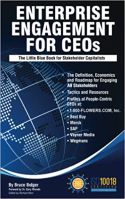
3. Books on implementation: Enterprise Engagement for CEOs and Enterprise Engagement: The Roadmap.
4. Advisory services and research: Strategic guidance, learning and certification on stakeholder management, measurement, metrics, and corporate sustainability reporting.
5. Permission-based targeted business development to identify and build relationships with the people most likely to buy.
Contact: Bruce Bolger at TheICEE.org; 914-591-7600, ext. 230.