

Do Stock Buybacks Make Sense Compared to Investing in Labor? Lessons from the 2023 Auto Strike
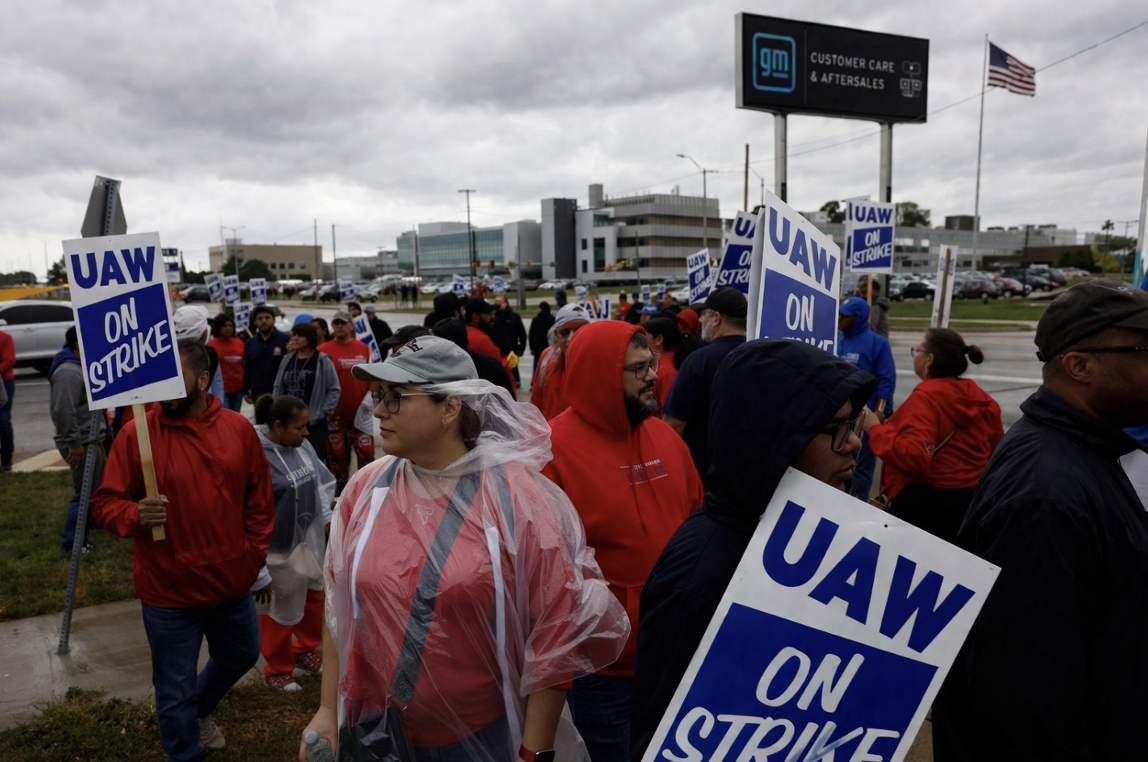 In the wake of the 2023 United Auto Workers (UAW) strike, an increasingly important question has emerged: Were US automakers’ extensive stock buybacks a sound use of capital compared to investing in labor conditions that might have reduced the risk of a costly strike?
How Much Was Spent on Buybacks Before the Strike?
What Did the Strike Cost the Automakers?
Buybacks vs. Labor Investment Through an NPV Lens
An Important Historical Context: Buybacks Were Once Effectively Illegal
Click here to subscribe to the ESM weekly e-newsletter.
The strike, which began on Sept. 15, 2023, was the first time the United Auto Workers struck all three major US automakers — General Motors, Ford, and Stellantis — simultaneously, according to the strike timeline summarized by Wikipedia. Could a greater investment in people and less use of stock buybacks provided a better long-term deal for investors? The challenge is the lack of a fundamental financial, productivity, and quality analysis to definitively answer the question. Equally intriguing, why aren't more investors, business analysts and journalists asking this question?
That said, based on reported buyback totals, the historical legalization of repurchases in 1982, and the documented costs of the 2023 UAW strike, a realistic NPV analysis suggests that buybacks appeared attractive largely because labor-conflict risk was underpriced or ignored. The strike did not merely represent an unforeseen shock. It exposed the limits of a capital-allocation framework that treats shareholder payouts as value-creating while discounting the financial value of labor stability. In that sense, the 2023 auto strike underscores a broader lesson: corporate strategies built around buybacks depend heavily on assumptions that may not hold when labor relations or break down.
The same questions could be asked of investments in customer service and quality, but that's for another article.
How Much Was Spent on Buybacks Before the Strike?
In the years leading up to the strike, the Big Three returned billions of dollars to shareholders through stock buybacks and dividends. According to Business Insider, which analyzed SEC filings and market data, General Motors spent about $2.5 billion on share repurchases in 2022, while Ford spent roughly $484 million that same year. The same reporting noted that GM repurchased approximately $14.2 billion of its own stock since 2010, and Ford about $3.5 billion between 2012 and 2022.
Looking at a longer horizon, the Economic Policy Institute (EPI) reported that between 2013 and 2022, GM, Ford, and Stellantis collectively distributed about $66 billion to shareholders through a combination of stock buybacks and dividends — a figure frequently cited in debates over wages, profits, and capital allocation in the auto industry:
What Did the Strike Cost the Automakers?
The 2023 strike imposed significant costs on the automakers.
According to Modern Distribution Management, the Big Three collectively lost approximately $3.6 billion in profits due to the strike’s impact on production and sales. Company-level disclosures align with that figure. CBS News reported that General Motors estimated the strike cost the company about $1.1 billion in earnings, based on GM’s public statements following the labor settlement:
These figures capture direct financial losses, but they do not fully account for secondary effects, including supplier and supply chain disruptions, delayed EV or other production programs, and long-term labor-relations damage.
If these estimates are correct, the auto companies returned over $60 billion to investors in the 10 years before the strike at a direct cost of $3.6 billion in profits due to the strike. The cost of giving the estimated 140,000 US employees at the time would have been about $420 million, not including benefits, or about $1.4 billion over 10 years.
Buybacks vs. Labor Investment Through an NPV Lens
From a conventional corporate-finance perspective, buybacks are often defended as value-neutral or value-enhancing when firms lack higher-return internal investments. McKinsey & Company has argued that, under standard assumptions, share repurchases should not reduce long-term firm value if executed at reasonable valuations. However, those assumptions typically exclude labor conflict, productivity, quality or service risk. They also treat labor peace as a background condition rather than an asset requiring investment.
When a fuller net present value (NPV) framework is applied — one that incorporates the probability of a strike, the scale of potential losses, and the risk-reducing value of higher wages, job security, and improved working conditions, the comparison changes. Investments in labor may reduce short-term earnings or EPS, but they can increase expected firm value by lowering downside risk. This does not include the potential for improved quality and productivity of having a more engaged workforce and dealer network.
While ESM could find no evidence that strikes automatically have a long-term impact on customer satisfaction, nor on quality, productivity, or engagement, there is no evidence that they help.
An Important Historical Context: Buybacks Were Once Effectively Illegal
It is often overlooked that stock buybacks are a relatively recent and policy-enabled corporate practice. For much of the 20th century, open-market share repurchases were widely regarded as a form of illegal market manipulation under US securities law. According to legal and regulatory histories summarized by Harvard Law School’s Forum on Corporate Governance, companies that repurchased their own shares risked enforcement under anti-fraud and anti-manipulation provisions of the Securities Exchange Act of 1934.
That changed in 1982, when the US Securities and Exchange Commission adopted Rule 10b-18, which created a “safe harbor” protecting companies from manipulation charges if buybacks followed certain conditions related to timing, price, and volume. As Investopedia explains, Rule 10b-18 did not require buybacks, but it made them legally safe and operationally routine for public companies for the first time.
This regulatory shift is critical: it means today’s large-scale buybacks are not a timeless feature of capitalism, but a policy choice that reshaped corporate incentives toward shareholder payouts rather than retained earnings, stakeholder investment, or traditional dividends. The question is: do stock buybacks make as much sense when the impact on workforce and customer engagement get factored in?
Enterprise Engagement Alliance Services
 Celebrating our 17th year, the Enterprise Engagement Alliance helps organizations enhance performance through:
1. Information and marketing opportunities on stakeholder management and total rewards:
- ESM Weekly on stakeholder management since 2009. Click here to subscribe; click here for media kit.
- RRN Weekly on total rewards since 1996. Click here to subscribe; click here for media kit.
- EEA YouTube channel on enterprise engagement, human capital, and total rewards since 2020
 Management Academy to enhance future equity value for your organization.
3. Books on implementation: Enterprise Engagement for CEOs and Enterprise Engagement: The Roadmap.
4. Advisory services and research: Strategic guidance, learning and certification on stakeholder management, measurement, metrics, and corporate sustainability reporting.
5. Permission-based targeted business development to identify and build relationships with the people most likely to buy.
Contact: Bruce Bolger at TheICEE.org; 914-591-7600, ext. 230.