

Beware of Impact Fraud: Why Buyers Should Demand Proof Behind Engagement and Experience Claims
 Over the last year, more incentive, recognition, reward and motivational event companies have begun talking about return-on-investment and impact metrics on their web sites. Here’s how to distinguish concrete value creation from buzzwords.
By Darwin Hanson
Hanson is Chief Human Capital Analytics Advisor to the Enterprise Engagement Alliance and Founder, CEO of TM Evolution, a compensation and human capital analytics firm, and CEO of the International Center for Enterprise Engagement impact analytics and reporting firm.
Distinguishing Claims From Reality
What Buyers Should Ask About Metrics
Questions to Ask About Expertise
Red Flags Buyers Should Watch For
Click here to subscribe to the ESM weekly e-newsletter.
For years, the meetings, incentives, rewards, recognition, loyalty, incentive travel, employee experience, and engagement businesses have played an important role in helping organizations focus greater attention on motivation, culture, appreciation, wellness, experiences, and human performance. Today, the challenge remains that most of these activities are based on little concrete measurement related to concrete value creation.
As the market has evolved, the language surrounding engagement, purpose, belonging, behavioral science, and now impact measurement has naturally evolved with it. The challenge is not that these concepts lack value. It is that as terminology becomes more widely adopted across the marketplace, the definitions and methodologies behind the language can sometimes become inconsistent. “Impact” now risks becoming another term interpreted very differently from one provider to another unless organizations ask for greater clarity around how outcomes are actually measured and validated.
Over the last year, ESM and its sister publication RRN have consistently highlighted the importance of transparent impact measurement rooted in methodologies long used in Total Quality Management and operational excellence systems. We have repeatedly referenced the work of Jack Phillips and Patti Phillips, founders of the ROI Institute, whose approaches focus on systematically connecting people investments to business outcomes through disciplined measurement, isolation of variables, and continuous improvement built into every effort from the very start.
Distinguishing Claims From Reality
What is becoming increasingly concerning is how rapidly the language of impact, analytics, ROI, behavioral science, and business outcomes is now appearing across virtually every segment of the engagement marketplace with almost no substantiation. More meetings companies, incentive travel firms, recognition providers, rewards platforms, employee experience consultants, event agencies, loyalty companies, culture consultants, and technology platforms are beginning to market themselves as experts in measurable impact. Yet in many cases, the specifics remain vague or entirely absent.
That does not mean these companies lack good intentions or fail to provide value. Many probably create excellent experiences, memorable travel programs, effective recognition campaigns, strong communications, or useful technologies. The concern is that buyers increasingly are being promised measurable organizational outcomes without being shown the rigor behind the claims.Too often, what is presented as “impact measurement” turns out to be activity reporting.
Dashboards display participation rates, event attendance, survey completions, recognition posts, app engagement, reward redemptions, social interactions, or satisfaction scores. Those metrics may be operationally useful, but by themselves they do not prove organizational impact. They do not necessarily demonstrate improvements in productivity, retention, customer satisfaction, quality, safety, sales performance, profitability, or make little to no attempt to seriously address short- or long-term value creation.
This distinction matters because organizations now spend billions annually on experiences, incentives, recognition, communications, wellness, engagement, and culture initiatives while employee engagement levels remain historically weak in many parts of the world along with customer satisfaction scores. The gap between activity and measurable business impact remains enormous.
One reason is that real impact measurement seems difficult. It requires more than software dashboards or post-event surveys. It requires a disciplined process for establishing objectives, defining measurable outcomes, isolating variables, tracking performance over time, linking outcomes to financial benefits, and continuously refining programs based on evidence. These are management disciplines rooted in quality management principles that have existed for decades but have only recently begun entering the mainstream engagement conversation.
As the language of impact spreads throughout the market, organizations should become more careful buyers. They should ask vendors not simply whether they provide analytics or ROI reporting, but exactly how those measurements are created and validated and by who.
What Buyers Should Ask About Metrics
Organizations evaluating engagement, recognition, incentive, loyalty, travel, or experience providers should begin demanding far greater specificity around measurement claims. The first question should be simple: What metrics are actually being measured?
Many providers focus primarily on activity metrics such as participation, engagement rates, reward redemptions, survey completion, or event attendance. While useful operational indicators, those measurements are very different from business outcome metrics such as productivity improvement, retention changes, sales growth, customer satisfaction, safety performance, profitability, referral rates, absenteeism reduction, or quality improvement.
Buyers should also ask:
- What business objective is the program specifically designed to influence?
- What baseline measurements existed before the initiative began?
- How is success defined?
- For how long is performance tracked?
- What operational or financial metrics are tied to the initiative?
- How are outside variables accounted for?
- Can the methodology be independently explained, replicated, or audited?
- What evidence exists from prior client programs?
Questions to Ask About Expertise
Companies should also carefully evaluate the qualifications of the people designing and measuring programs. Because even the largest organizations make few demands on the IRR marketplace for demonstrated expertise in design and impact measurement, and the broader subject of engagement is taught almost nowhere in schools or professional education, it will be difficult to find people with credentials other than years of experience in the field.
Many organizations in the engagement marketplace are highly skilled in hospitality, technology, events, communications, rewards, gifting, promotions, or creative services. Those capabilities matter. But buyers increasingly should distinguish between firms skilled at delivering experiences and firms capable of designing measurable organizational interventions. Important questions include:
- Who specifically designs the program and measurement framework?
- What backgrounds do those individuals have in statistics, behavioral science, organizational psychology, operational improvement, or ROI analysis?
- Do they have expertise in continuous improvement methodologies or quality management systems?
- Are they trained in isolating variables and evaluating causation versus correlation?
- Can they explain limitations and confidence levels in their findings?
- Are they primarily reporting software data, or are they conducting disciplined organizational analysis?
- What financial analytics do they recommend?
Red Flags Buyers Should Watch For
There are several warning signs buyers increasingly should recognize:
- Vendors that use broad language about “transformational impact” without defining measurable outcomes.
- Claims of ROI without explaining the calculation methodology.
- Heavy dependence on vanity metrics such as clicks, likes, attendance, or app activity.
- Behavioral science claims unsupported by specific expertise or methodology.
- AI-driven “insights” that cannot clearly explain what is actually being analyzed.
- No discussion of assumptions, limitations, or outside variables.
- Programs presented as universally effective regardless of industry, workforce, culture, or business objectives.
- Case studies focused primarily on participant satisfaction rather than measurable operational outcomes, or that do not include the name of the company.
- Little demonstrated in human capital or financial analytics.
Equally important is whether providers can clearly explain how their programs connect to organizational objectives. A recognition initiative tied to retention challenges, a customer experience strategy linked to referral behavior, an incentive program aligned with productivity or quality metrics, or a travel experience designed to reinforce specific performance behaviors all can potentially create measurable value. But the connection should be explicitly defined rather than implied through fashionable terminology.
Perhaps the greatest warning sign is when every solution suddenly promises transformation, culture change, engagement, loyalty, experience optimization, behavioral science, AI-driven insights, and measurable impact simultaneously without clearly explaining the mechanisms or expertise behind those claims.
Industries built on marketing naturally evolve toward fashionable terminology. That does not make the underlying concepts invalid. It simply means buyers must separate language from methodology.
The engagement marketplace has no lack of ideas, experiences, or technologies. It needs greater transparency about what actually works, how outcomes are measured, and where real expertise exists. Otherwise, impact measurement risks becoming just another fashionable phrase layered onto an industry already crowded with them.
Enterprise Engagement Alliance Services
 Celebrating our 17th year, the Enterprise Engagement Alliance helps organizations enhance performance through:
1. Information and marketing opportunities on stakeholder management and total rewards:
- ESM Weekly on stakeholder management since 2009. Click here to subscribe; click here for media kit.
- RRN Weekly on total rewards since 1996. Click here to subscribe; click here for media kit.
- EEA YouTube channel on enterprise engagement, human capital, and total rewards since 2020
 Management Academy to enhance future equity value for your organization.
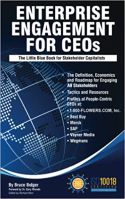
3. Books on implementation: Enterprise Engagement for CEOs and Enterprise Engagement: The Roadmap.
4. Advisory services and research: Strategic guidance, learning and certification on stakeholder management, measurement, metrics, and corporate sustainability reporting.
5. Permission-based targeted business development to identify and build relationships with the people most likely to buy.
Contact: Bruce Bolger at TheICEE.org; 914-591-7600, ext. 230.