

The Hidden Cost of Disengagement: How Employee and Customer Behavior Shows Up in the Numbers
.jpg) Research suggests that disengagement among employees and customers is not merely a morale issue—it can have measurable consequences for productivity, profitability, retention, innovation, and growth.
Research suggests that disengagement among employees and customers is not merely a morale issue—it can have measurable consequences for productivity, profitability, retention, innovation, and growth.What We Have Here Is a Failure to Engage
How Employee Engagement Affects Business Outcomes
How Customer Engagement Affects Business Outcomes
What We Have Here Is a Failure to Engage
Click here to subscribe to the ESM weekly e-newsletter.
Despite decades of investment in leadership training, employee surveys, customer experience initiatives, and workplace benefits, employee engagement remains stubbornly low while customer trust and loyalty continue to face pressure in many industries. According to the latest findings from Gallup's State of the Global Workplace research, low employee engagement costs the global economy trillions of dollars annually in lost productivity.
What if the issue is not primarily a failure of people, but a failure of systems? Organizations routinely measure sales, finance, operations, quality, and customer outcomes. Yet few have a systematic process for aligning the interests of employees, customers, distribution and supply chain partners, communities, and investors around common goals. In many cases, disengagement may be less a reflection of employee attitudes or customer expectations than a symptom of management systems that fail to foster communication, involvement, recognition, development, trust, and continuous improvement.
The evidence increasingly suggests that engagement affects behavior, behavior affects experiences, and experiences affect financial outcomes. Engaged employees are more likely to take initiative, solve problems, and create positive customer experiences. Engaged customers are more likely to remain loyal, purchase more, recommend the brand, and forgive occasional mistakes. Disengaged employees and customers tend to exhibit the opposite behaviors, creating hidden costs that can materially affect organizational performance.
The problem: few organizations have in place a strategy to not only monitor and measure these impacts but to take action based on the results.
What We Have Here Is a Failure to Engage
The practical lesson is that engagement should not be viewed as an employee satisfaction initiative or a customer service program. It is an operating discipline. Employees who understand the organization's purpose, goals, and values are more likely to create positive experiences for
The charts below illustrate how engagement—or the lack of it—can influence business results through the actions of employees and customers.
How Employee Engagement Affects Business Outcomes
| Engaged Employees | Behaviors | Positive Effects | Disengaged Employees / Actively Disengaged | Behaviors | Negative Effects |
|---|---|---|---|---|---|
| Understand the organization's purpose and their role in achieving it. | Take initiative, solve problems, help colleagues, look for improvements. | Higher productivity, better quality, fewer errors, stronger customer experiences. | Do not feel connected to the purpose, goals, or leadership of the organization. | Do only what is required, avoid extra effort, resist change, withhold ideas. | Lower productivity, more defects, slower innovation, weaker customer service, both internal and external. |
| Feel recognized, heard, and fairly supported. | Stay longer, recommend the company, contribute discretionary effort. | Lower turnover and recruiting costs; stronger institutional knowledge. | Feel ignored, undervalued, or unfairly treated. | Quiet quit, complain, spread cynicism, leave when another opportunity appears. | Higher turnover, absenteeism, burnout, and management time spent on replacement and conflict. |
| Trust managers and believe leadership acts consistently with stated values. | Cooperate across silos, accept accountability, support change. | Faster execution, better teamwork, more resilient culture. | Distrust managers or believe stated values are merely slogans. | Protect turf, blame others, avoid accountability. | Slower execution, internal friction, reduced agility. |
| See customers as central to success. | Listen carefully, follow through, personalize service, identify unmet needs. | Higher customer satisfaction, loyalty, referrals, and repeat business. | View customers as interruptions or problems. | Rush interactions, miss details, fail to recover service issues. | Poor experiences, complaints, lost customers, reputational damage. |
These relationships are supported by Gallup's long-running workplace research. Its Q12 Meta-Analysis of Employee Engagement found that business units with higher employee engagement significantly outperform those with lower engagement on profitability, productivity, customer loyalty, turnover, absenteeism, safety incidents, quality, and shrinkage.
How Customer Engagement Affects Business Outcomes
| Engaged Customers | Behaviors | Positive Effects | Disengaged Customers / Detractors | Behaviors | Negative Effects |
|---|---|---|---|---|---|
| Trust the organization and believe it delivers value. | Buy again, stay longer, consolidate purchases. | Higher retention, lifetime value, and share of wallet. | Doubt the organization's value or competence. | Shop alternatives, reduce spending, delay purchases. | Lower retention, weaker revenue growth, higher acquisition pressure. |
| Feel the company understands and respects them. | Forgive occasional mistakes, provide feedback, remain open to new offers. | Greater resilience after service failures; better insights for improvement. | Feel ignored, confused, or treated transactionally. | Complain, abandon transactions, avoid future contact. | More churn, higher service costs, lower conversion. |
| Have consistently easy, successful, and emotionally positive experiences. | Recommend the brand, post positive reviews, advocate informally. | More referrals, lower acquisition costs, stronger reputation. | Experience friction, broken promises, or indifference. | Post negative reviews, warn others, escalate complaints. | Brand damage, lost referrals, higher remediation costs. |
| Believe the brand's promises match actual delivery. | Pay a premium, renew, expand the relationship. | Stronger margins and pricing power. | Believe marketing exceeds reality. | Demand discounts, question fees, switch for price. | Margin pressure, commoditization, lower loyalty. |
Research on customer experience reveals a similar pattern. According to the Qualtrics XM Institute's research on the ROI of customer experience, customers who have positive experiences are significantly more likely to trust a company, recommend it to others, forgive mistakes, and purchase additional products and services. Likewise, the Forrester Customer Experience Index (CX Index) has consistently found that companies providing superior customer experiences tend to achieve faster revenue growth and stronger customer loyalty than their competitors.
What We Have Here Is a Failure to Engage
The practical lesson is that engagement should not be viewed as an employee satisfaction initiative or a customer service program. It is an operating discipline. Employees who understand the organization's purpose, goals, and values are more likely to create positive experiences for customers. Customers who trust an organization and consistently receive value are more likely to remain loyal, buy more, and recommend the brand to others. The two forms of engagement reinforce one another.
This is why leading organizations increasingly focus on creating systems that align purpose, goals, communication, recognition, development, measurement, customer feedback, and continuous improvement across the enterprise. Without such systems, engagement becomes dependent on individual managers, isolated programs, or temporary ad hoc campaigns.
The evidence suggests that disengagement is not simply a people problem or a customer problem. It is a business problem. Whether measured through productivity, retention, quality, customer loyalty, or profitability, organizations ultimately experience the financial consequences of how effectively they engage the people who create and purchase value. In that sense, engagement is not about making people happy. It is about creating the conditions in which employees and customers choose to contribute more value, stay longer, advocate more often, and help the organization succeed.
The challenge facing organizations today may not be a lack of leadership training, employee benefits, recognition programs, customer surveys, or technology. It may be the absence of a comprehensive management system that systematically aligns the interests of all stakeholders around a shared purpose, measurable goals, and continuous improvement.
If employee and customer engagement remain stubbornly low despite decades of investment, perhaps the problem is not that people are unwilling to engage. Perhaps, as the evidence increasingly suggests, what we have here is a failure to engage.
Enterprise Engagement Alliance Services
 Celebrating our 17th year, the Enterprise Engagement Alliance helps organizations enhance performance through:
1. Information and marketing opportunities on stakeholder management and total rewards:
- ESM Weekly on stakeholder management since 2009. Click here to subscribe; click here for media kit.
- RRN Weekly on total rewards since 1996. Click here to subscribe; click here for media kit.
- EEA YouTube channel on enterprise engagement, human capital, and total rewards since 2020
 Management Academy to enhance future equity value for your organization.
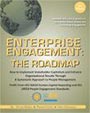
3. Books on implementation: Enterprise Engagement for CEOs and Enterprise Engagement: The Roadmap.
4. Advisory services and research: Strategic guidance, learning and certification on stakeholder management, measurement, metrics, and corporate sustainability reporting.
5. Permission-based targeted business development to identify and build relationships with the people most likely to buy.
Contact: Bruce Bolger at TheICEE.org; 914-591-7600, ext. 230.