

The Age of HR Embraces Stakeholders but Stops Short of a Complete Engagement System
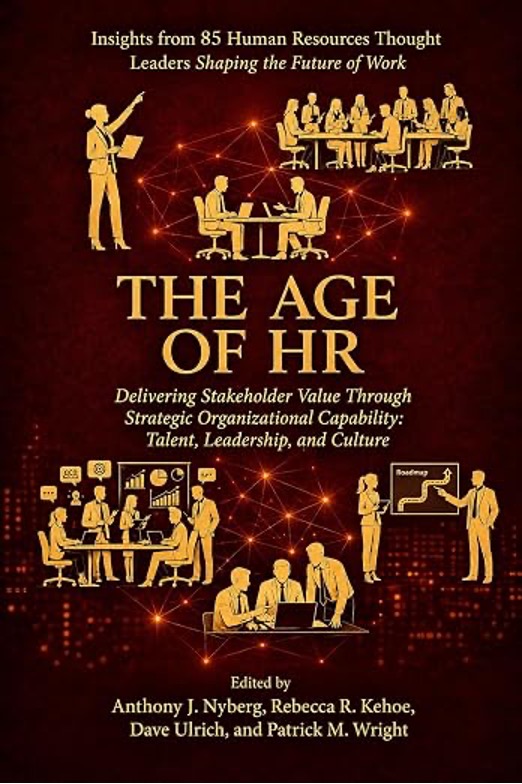 A new book from Dave Ulrich and leading HR experts strongly advocates for stakeholder value creation, but places greater emphasis on leadership, talent, and culture than more specifically on systematic stakeholder engagement. The era of stakeholder management has arrived in HR—the question is: how thoroughly does this address more specifically stakeholder engagement?
 The Book Signals a Significant Shift Toward Stakeholder Thinking in HR
Strong on Stakeholders, Less Focused on Engagement
Human Capability as the Driver of Performance
Click here to subscribe to the ESM weekly e-newsletter.
A review of the newly published The Age of HR: Delivering Stakeholder Value Through Strategic Organizational Capability: Talent, Leadership, and Culture finds that many of today's leading HR thinkers have moved decisively toward a stakeholder-oriented view of human resources management but have not directly embraced stakeholder engagement as a distinct organizational process.
The 337-page volume brings together contributions from more than 70 HR executives, academics, and practitioners and represents one of the most comprehensive assessments of the future of human resources published in recent years. It marks a striking embrace of the concepts of stakeholder management, long advocated by Dave Ulrich, Rensis LIkert Professor Emeritus, University of Michigan and co-founder of the RBL Group advisory firm. While the contributors approach the topic from different perspectives, a common theme emerges throughout the book: organizations increasingly succeed or fail based on how effectively they create value through people.
 Edited by Ulrich and Anthony J. Nyberg, Director, Center for Executive Succession; Rebecca R. Kehoe, Professor of Human Resources Studies at Cornell University; Patrick M. Wright, Thomas C. Vandiver Bicentennial Chair, Associate Dean for Corporate Relations, Darla Moore School of Business, the book argues that organizations create value not just through employees, but all stakeholders--customers, investors, communities, and others. The book largely focuses on leadership, culture, talent, and organizational capability rather than on the systematic and practical processes used to align stakeholders around purpose, goals, objectives, values, communication, feedback, recognition, and continuous improvement common in total quality management. While the book articulates a clear vision for the HR field to create more value for organizations, it does not fully provide a comprehensive management system for aligning and engaging those stakeholders around shared purpose, goals, objectives, and values. In that sense, The Age of HR offers a compelling explanation of why stakeholder engagement matters, while leaving open important questions about how organizations can systematically put those principles into practice across the enterprise.
 Given that the focus of the book is on strategic human resources and not specifically on engagement, noting this omission is not a critique but rather an observation. HR continues to overlook the critical importance of harmonizing the interests of all stakeholders toward a common purpose, goals, objectives, and values as has been recognized as essential in Total Quality Management (TQM) practices embodied in ISO 10018 people engagement standards.
The Book Signals a Significant Shift Toward Stakeholder Thinking in HR
Perhaps one of the most important contributions comes from Dave Ulrich, whose opening chapter, "HR at an Inflection Point: Four Pivots for Stakeholder HR," reflects a notable evolution in HR thinking. Ulrich argues that HR should no longer focus primarily on employees but should instead create value for multiple stakeholders, including employees, customers, investors, communities, business partners, executives, and boards. As he writes: "HR is less about HR than creating value for humans." This "outside-in" perspective encourages organizations to begin not with HR programs themselves, but with the value those programs create for stakeholders. For ESM readers, this represents a significant convergence with stakeholder management principles.
Strong on Stakeholders, Less Focused on Engagement
Where the book differs from enterprise engagement principles is in its treatment of engagement itself. The contributors consistently emphasize the importance of:
- Leadership
- Organizational culture
- Talent management
- Learning and development
- Employee experience
- Organizational capability
- Formal alignment systems
- Stakeholder involvement processes
- People operating systems
- Recognition and appreciation systems
- Job design
- Incentive design
- Structured listening and follow-up mechanisms
- Methods for connecting individual objectives to organizational purpose
- Statistical process controls and other methods of connecting employees and other stakeholders to financial outcomes.
- Continuous improvement methodologies
Human Capability as the Driver of Performance
Across the various chapters, the contributors generally agree that organizational success stems from four interconnected capabilities: talent, leadership, culture, and HR systems. Ulrich refers to these collectively as "human capability." The authors repeatedly argue that organizations create sustainable value not merely through products or technology but through their ability to build organizational capabilities that enable people to work together effectively. This view aligns closely with enterprise engagement thinking. However, many contributors appear to assume that engagement naturally follows from effective leadership, strong culture, and sound talent practices.
Enterprise engagement practitioners would likely agree that these capabilities are essential while also arguing that organizations need deliberate systems to align stakeholders around purpose, goals, objectives, values, communication, feedback, recognition, and continuous improvement, as is common in TQM. Employee engagement appears throughout the book, particularly in discussions of employee experience, well-being, culture, belonging, learning, and leadership; yet, engagement is rarely treated as the primary organizational challenge or system. Instead, engagement is generally viewed as one outcome of broader organizational capabilities.
Overall, The Age of HR represents one of the strongest endorsements of stakeholder-oriented management currently emerging from the HR profession. The book clearly recognizes that organizations create value through employees, customers, investors, communities, and other stakeholders. Its primary contribution is helping move HR beyond an employee-centric perspective toward a broader stakeholder framework and to embrace the expertise that this entails.
Enterprise Engagement Alliance Services
 Celebrating our 17th year, the Enterprise Engagement Alliance helps organizations enhance performance through:
1. Information and marketing opportunities on stakeholder management and total rewards:
- ESM Weekly on stakeholder management since 2009. Click here to subscribe; click here for media kit.
- RRN Weekly on total rewards since 1996. Click here to subscribe; click here for media kit.
- EEA YouTube channel on enterprise engagement, human capital, and total rewards since 2020
 Management Academy to enhance future equity value for your organization.
3. Books on implementation: Enterprise Engagement for CEOs and Enterprise Engagement: The Roadmap.
4. Advisory services and research: Strategic guidance, learning and certification on stakeholder management, measurement, metrics, and corporate sustainability reporting.
5. Permission-based targeted business development to identify and build relationships with the people most likely to buy.
Contact: Bruce Bolger at TheICEE.org; 914-591-7600, ext. 230.