

Employee Engagement Should Be an Operating Discipline, Not an HR Program
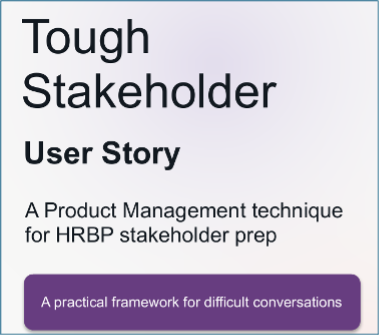
.png) Organizations may get more value from employee engagement by starting with the business problem and desired behavior change rather than with surveys, recognition programs, mentoring, events, or other activities. The author recently created a report on stakeholder management implementation.
Organizations may get more value from employee engagement by starting with the business problem and desired behavior change rather than with surveys, recognition programs, mentoring, events, or other activities. The author recently created a report on stakeholder management implementation. By Mariia Filatova
Filatove is an HR business partner with over eight years of experience in remote, multicultural environments spanning HR operations, employee relations, workforce planning, engagement, people analytics, and strategic business partnering. She recently left her position in Germany to relocate to the Netherlands.
Start With the Problem, Not the Program
Connect the Pieces Into One System
Engagement Cannot Belong to HR Alone
Replace the Activity Mindset With an Impact Mindset
The CPO as a Business Leader
Culture Is What the Organization Repeatedly Does
Click here to subscribe to the ESM weekly e-newsletter.
Too often, when organizations talk about employee engagement, the conversation begins with an activity. Should we introduce mentoring? Organize virtual coffee chats? Launch a recognition program? Conduct another survey? The problem is that the activity itself is not the solution. Before deciding what to do, I believe organizations should ask a much more fundamental question: What business or organizational problem are we trying to solve?
My perspective comes in part from the fact that I did not begin my career in traditional HR. My background includes product management and cross-functional operations, which taught me to look at the system behind a problem, the stakeholders involved, the behaviors we want to change and, ultimately, the business outcome we are trying to achieve.
As my work expanded into HR operations, business partnering, organizational effectiveness, employee engagement, performance management, workforce planning and manager development, I kept seeing the same pattern. Organizations often have good intentions and plenty of activity, but the connection between those activities and measurable organizational outcomes is not always clear.
Start With the Problem, Not the Program
Consider mentoring. If new employees are taking three months to become fully productive, introducing mentoring should not be justified simply because mentoring is considered a good engagement practice. The objective might instead be to reduce the time required to achieve effective performance by encouraging experienced employees to proactively transfer knowledge to new colleagues. That changes the conversation.
We now have an organizational problem, an outcome we can potentially measure and a specific behavior we want to encourage. Mentoring becomes the mechanism, not the objective. The same thinking can apply to recognition, communications, learning, employee listening, team meetings or almost any other people practice. Instead of asking, "What engagement initiative should we launch?" the better question may be, "What needs to change in the organization, what behaviors would produce that change, and how will we know whether it worked?"
Connect the Pieces Into One System
 None of these ideas is entirely new. Organizational development, behavioral science, change management and continuous improvement all offer well-established principles that can inform better people management practices. The challenge is that organizations do not always connect those principles into a practical operating model.
Most HR professionals understand that initiatives should support business needs. Most agree that leadership behavior matters and that engagement should be measured. Yet a company may conduct an employee survey without establishing clear accountability for what happens next. Another may launch multiple engagement initiatives simultaneously without determining which ones actually make a difference. HR may find itself repeatedly pushing a program that managers and employees never adopt as part of everyday work.
The opportunity is to connect business outcomes, behavior change, accountability, leadership modeling and measurement into one discipline. Before launching an initiative, I suggest asking five basic questions:
- What problem are we solving?
- What behavior should change?
- How will we measure success?
- Who owns the outcome?
- Can the new behavior ultimately become part of everyday work?
Engagement Cannot Belong to HR Alone
HR can help design the system, facilitate it and measure results, but HR cannot create culture by itself. Managers play a particularly important role because much of an employee's experience of an organization comes through day-to-day interactions with management. Senior leaders matter as well because people pay attention to what leaders do, not simply to what company communications tell employees they should do.
If an organization wants people to learn from one another, leaders need to participate in learning and mentoring. If management wants candid feedback, leaders must demonstrate that they can receive feedback and visibly act on it. If the company wants people to learn from mistakes, management must be willing to openly discuss lessons learned. For that reason, engagement should be viewed as a shared operating responsibility involving HR and people teams, HR business partners, functional managers, Learning and Development, People Analytics, founders and senior leadership.
Someone still needs to be accountable. One of the biggest risks is assigning an initiative to "HR" or to "everyone." In practice, that can mean nobody truly owns the outcome. Each initiative should have a clearly identified person accountable for ensuring that it happens, is measured and improves over time, even if many people are involved in execution.
Replace the Activity Mindset With an Impact Mindset
HR organizations are increasingly focused on data, business partnering and strategic impact. At the same time, many are under pressure to deliver a large number of programs with limited resources. That combination can unintentionally encourage an activity mindset. We launched something, therefore we are addressing engagement.
I think we should challenge that assumption. Success should be judged less by how many initiatives HR launches and more by whether those initiatives change everyday behavior and improve meaningful organizational outcomes. In many cases, one carefully designed initiative that produces measurable improvement may have more value than five programs introduced simultaneously.
It also does not require a massive transformation. Organizations can start small, establish a baseline, test an approach, measure what happens and expand what works. A disappointing result should not automatically mean abandoning an initiative. It should lead to investigation, learning and adjustment. One successful initiative may improve one week. A repeated habit can gradually change a culture.
The CPO as a Business Leader
This way of thinking also has implications for the role of the Chief People Officer and HR business partners. I do not see the CPO simply as the people equivalent of a Chief Operating Officer. A strong CPO should be a business leader first and a functional expert second, able to look across business strategy, organizational capability, leadership, workforce planning, culture, employee experience and long-term sustainability.
Organizations naturally optimize within functions. Operations may emphasize efficiency, finance may focus on costs, business leaders on growth, and HR on employee experience. Each priority is legitimate, but they can conflict. A senior people leader can help make those trade-offs visible and ensure that workforce and organizational consequences are considered as part of business decisions rather than after those decisions have already been made.
The objective is not artificial harmony or an assumption that everybody can get everything they want. It is better alignment between business performance, organizational capability and the people who make that performance possible.
Culture Is What the Organization Repeatedly Does
I do not see this framework as a finished formula. It should evolve through testing because every organization has different problems, cultures, management capabilities and resources. There is no reason every company should copy the same engagement programs. What matters more is the discipline behind them. Start by asking: What is happening in our organization that we want to change, why does it matter, and what would success actually look like?
From there, engagement can become part of the organization's operating system instead of a collection of standalone HR activities. This is particularly important in remote and distributed organizations, where culture cannot depend on spontaneous office interactions. Culture has to be created more intentionally through the systems, habits, decisions and behaviors that people repeat every day. In the end, engagement efforts should not be something HR periodically launches, but as something the organization continuously manages to link motivation with measurable outcomes.
Enterprise Engagement Alliance Services
 Celebrating our 17th year, the Enterprise Engagement Alliance helps organizations enhance performance through:
1. Information and marketing opportunities on stakeholder management and total rewards:
- ESM Weekly on stakeholder management since 2009. Click here to subscribe; click here for media kit.
- RRN Weekly on total rewards since 1996. Click here to subscribe; click here for media kit.
- EEA YouTube channel on enterprise engagement, human capital, and total rewards since 2020
 Management Academy to enhance future equity value for your organization.
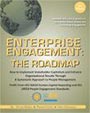
3. Books on implementation: Enterprise Engagement for CEOs and Enterprise Engagement: The Roadmap.
4. Advisory services and research: Strategic guidance, learning and certification on stakeholder management, measurement, metrics, and corporate sustainability reporting.
5. Permission-based targeted business development to identify and build relationships with the people most likely to buy.
Contact: Bruce Bolger at TheICEE.org; 914-591-7600, ext. 230.