

Why the Term Human Resources Is Obsolete
.jpeg) Employees are no more a “resource” than customers are. Both are voluntary stakeholders whose commitment determines whether an organization creates sustainable value. This isn’t just a proposal for another name change. It suggests a different way of looking at the field to focus on people value creation and employee relationship management.
Employees are no more a “resource” than customers are. Both are voluntary stakeholders whose commitment determines whether an organization creates sustainable value. This isn’t just a proposal for another name change. It suggests a different way of looking at the field to focus on people value creation and employee relationship management. By Bruce Bolger
An Industrial-Era Legacy
The Engagement Numbers Suggest Something Is Wrong
Employees Are Not Literally Assets on Balance Sheets—and That Is the Problem
What If We Managed Employees Like Customers?
From Human Resources to People Value Creation
Click here to subscribe to the ESM weekly e-newsletter.
Perhaps one of the biggest obstacles to employee engagement is hiding in plain sight in the name
of the department responsible for it: Human Resources. Nomenclature changes alone are never enough to foster change. What’s needed most is a different way of looking at the profession shifting from a focus on administration to value creation.
We would never call customers “revenue resources.” We understand that customers have choices, expectations, emotions, needs, and economic value that can grow or disappear depending on how they are treated. So why do organizations routinely use a fundamentally different vocabulary for the people whose work creates the products, services, innovations, and customer experiences those customers buy? The problem is not simply semantics. Words often reveal the management system and mentality behind them.
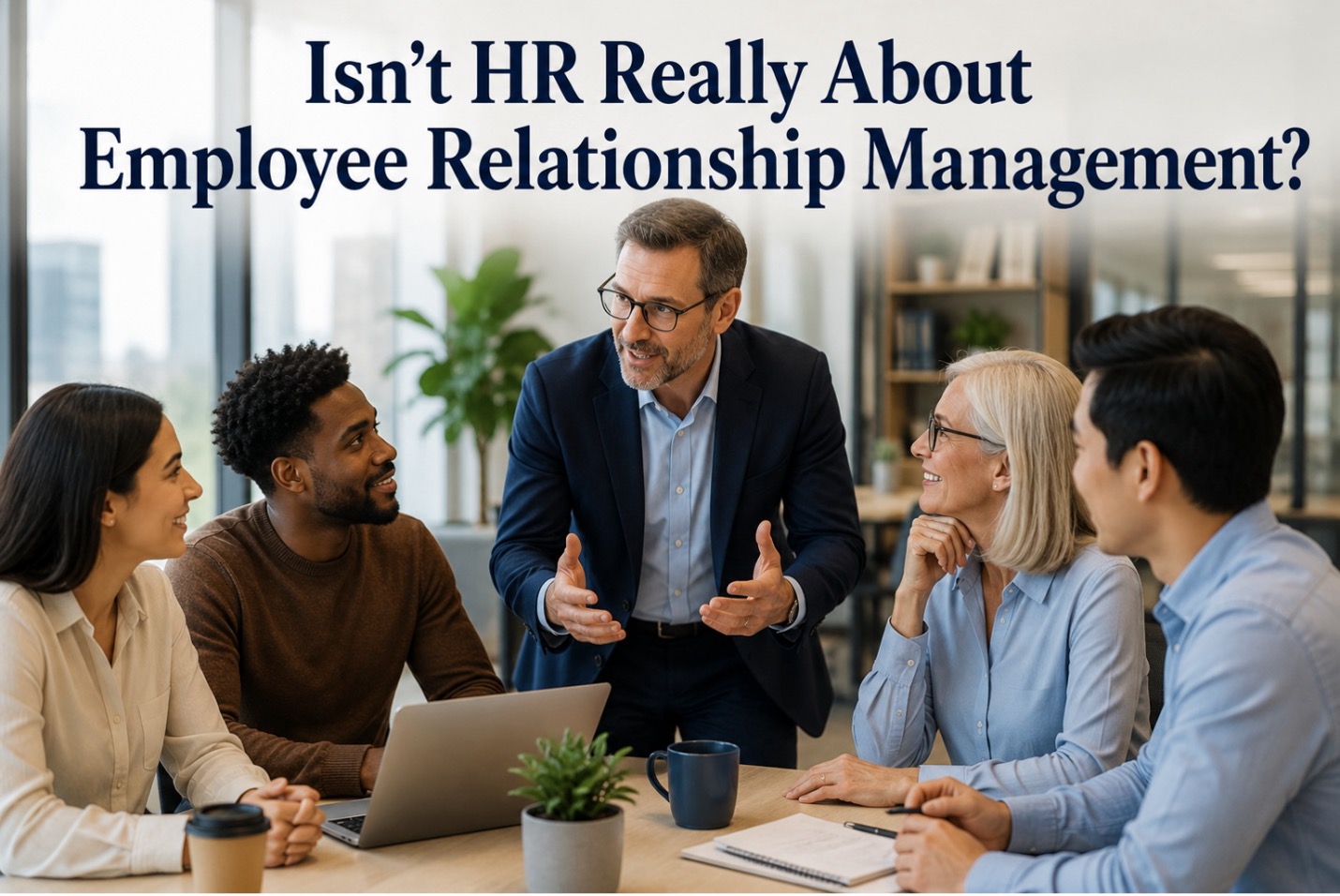
In the world of marketing, the term customer relationship management emerged to better define the integrated processes involved with managing this critical asset. How about employee relationship management to describe what is called human resources today?
An Industrial-Era Legacy
 The term Human Resources itself did not originate at the dawn of the Industrial Revolution but shortly after when large companies realized they needed someone to look after the basic welfare of employees. Research into the history of HR traces today's function to the rise of modern industry in the late 19th century, when rapidly growing organizations needed formal systems for managing labor. Personnel management subsequently developed out of industrial relations, scientific management, industrial welfare, psychology, and other disciplines. The term Human Resource management gained widespread use much later, particularly beginning in the 1960s.
 The underlying idea reflects an industrial-era model: capital, machinery, raw materials, and labor were inputs to be organized as efficiently as possible to produce output. That logic made considerable sense when large numbers of employees performed standardized physical tasks in factories. It makes far less sense in an economy increasingly dependent on knowledge, service, innovation, relationships, problem solving, and customer experience.
Machines, steel, capital, etc. are resources. None can decide tomorrow to work for or become a competitor, recommend the company to a friend, devise a better process, delight an unhappy customer, expose unethical behavior, or quietly stop caring. Only people can.
The Engagement Numbers Suggest Something Is Wrong
It would be simplistic to argue that the name “Human Resources” causes low engagement. The more serious issue is the management philosophy and mentality the terminology can represent; i.e., if this person leaves, we will just get another. Despite decades of employee surveys, recognition programs, wellness initiatives, benefits, leadership training, and employee-experience programs, Gallup reports that only 20% of employees worldwide were engaged in 2025. In the United States, engagement averaged 31% in 2025, unchanged from 2024 and down from 36% in 2020. Gallup describes the US level as near a decade low.
This is particularly striking because the business case is no longer speculative. Gallup's latest Q12 meta-analysis covers more than 183,000 business units and 3.3 million employees. Top-quartile engagement units substantially outperform bottom-quartile units in customer loyalty, profitability, productivity, turnover, absenteeism, safety, quality, and other measures. In other words, organizations know people matter. What many still lack is a management system built around that reality. The Enterprise Engagement Index created by the EEA that has analyzed nearly 140 companies in 49 industries finds a clear correlation between human capital return on investment and financial and/or share price performance.
Employees Are Not Literally Assets on Balance Sheets—and That Is the Problem
There is an important accounting distinction. Employees cannot normally appear on a balance sheet as corporate assets because the organization does not control them. International accounting standards explicitly note that trained employees can leave, meaning the company lacks the control required for their capabilities to qualify as an intangible asset. Neither, of course, does a company own its customers, so they too--arguably the ultimate source of wealth--do not appear on balance sheets either, except in the form of revenues. In the meantime, businesses devote enormous resources to measuring customer acquisition costs, retention, loyalty, lifetime value, satisfaction, referrals, purchasing behavior, and the entire customer journey. Why shouldn't organizations apply comparable rigor to the people responsible for creating that customer value?
Employees are better understood as voluntary value-creating stakeholders with asset-like economics. Their knowledge, relationships, commitment, ideas, skills, and willingness to contribute can appreciate or depreciate depending on how the organization manages the relationship.
What If We Managed Employees Like Customers?
Marketing starts by asking what customers need and then attempts to align those needs with the organization's objectives. It segments customers rather than assuming everyone wants the same thing. It maps the customer journey, monitors satisfaction and behavior, identifies points of friction, analyzes defections, personalizes communications, rewards loyalty, and calculates the financial impact. Imagine applying the same discipline to employees.
Recruiting would be treated like customer acquisition, with careful attention to whether the organization's promise matches the actual experience. Candidates would be treated with respect, as are customers. Onboarding would be viewed as the beginning of a relationship rather than an administrative process in which candidates are discarded like trash. Managers would continually learn what different employees value rather than assuming compensation alone determines motivation.
Training would be considered an investment in value creation. Recognition would reinforce behaviors linked to organizational goals rather than simply distribute awards. Communications would be designed around relevance and credibility. Employee departures would be studied as seriously as customer defections. Most importantly, organizations would connect employee experience data with customer, productivity, quality, innovation, retention, and financial outcomes instead of placing engagement survey results in an HR silo.
This is hardly a radical proposition. The Service-Value-Profit Chain, introduced by Harvard Business School researchers James L. Heskett, Thomas O. Jones, Gary W. Loveman, W. Earl Sasser, Jr. and Leonard A. Schlesinger, decades ago, identified the relationship among employee satisfaction and loyalty, customer value and loyalty, and ultimately growth and profitability. Its central insight was that companies create customer value through capable, committed employees supported by effective systems.
From Human Resources to People Value Creation
The answer is not simply renaming HR Employee Relationship Management. Plenty of companies have replaced the HR title without changing how people are managed. The real change is from Human Resource management to people value management. The job would no longer primarily be to administer the workforce. It would be to help leadership systematically create value through people—just as marketing seeks to create value through customers and operations through processes and technology.
That means understanding employee economics, the mechanics of how employees contribute to value creation and financial results. It includes the same need to understand employee needs, align them with organizational purpose and goals, provide the capabilities and tools people needed to succeed, measure the behaviors and outcomes that matter, and continuously improve the system based on evidence.
Total quality management transformed business by teaching companies that quality cannot be inspected into a finished product. It must be designed into the entire operating system. Perhaps employee engagement has remained stubbornly low for the same reason. Engagement cannot be added to people through programs. It has to be designed into the way the organization is managed.
Enterprise Engagement Alliance Services
 Celebrating our 17th year, the Enterprise Engagement Alliance helps organizations enhance performance through:
1. Information and marketing opportunities on stakeholder management and total rewards:
- ESM Weekly on stakeholder management since 2009. Click here to subscribe; click here for media kit.
- RRN Weekly on total rewards since 1996. Click here to subscribe; click here for media kit.
- EEA YouTube channel on enterprise engagement, human capital, and total rewards since 2020
 Management Academy to enhance future equity value for your organization.
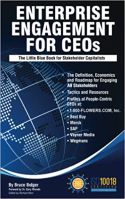
3. Books on implementation: Enterprise Engagement for CEOs and Enterprise Engagement: The Roadmap.
4. Advisory services and research: Strategic guidance, learning and certification on stakeholder management, measurement, metrics, and corporate sustainability reporting.
5. Permission-based targeted business development to identify and build relationships with the people most likely to buy.
Contact: Bruce Bolger at TheICEE.org; 914-591-7600, ext. 230.