

Williams-Sonoma Turns a Tariff Refund Into Employee Recognition
Recognition Connected to a Business Outcome
Why a 401(k) Contribution Is Significant
Employees Were Not the Only Stakeholders
Not Proof of an Effective Recognition Strategy
Click here to subscribe to the ESM weekly e-newsletter.
Buried inside the financial details of Williams-Sonoma’s strong second-quarter results is an employee recognition decision that may be more noteworthy to engagement professionals than to the investors that cover the industry.
Williams-Sonoma received approximately $200 million in refunds and interest related to tariffs previously paid under the International Emergency Economic Powers Act. Of the amount recognized in second-quarter income, the company set aside $47.5 million to reimburse merchandise vendors that had previously provided tariff-related concessions and recorded another $10 million as a one-time employee recognition expense.
What exactly does “employee recognition expense” mean in this case? It was not a recognition-platform expenditure, merchandise award or cash bonus. Williams-Sonoma says it made a discretionary contribution to the 401(k) accounts of all eligible employees “in recognition of their efforts navigating the IEEPA tariffs.” That makes the decision particularly interesting.
Recognition Connected to a Business Outcome
Recognition programs are frequently criticized for rewarding activity without making a clear connection to the organization’s purpose, goals and financial results. Employees receive points for birthdays, anniversaries, peer nominations and other activities that may have cultural value, while management often has little ability to demonstrate a relationship between recognition spending and organizational performance.
Williams-Sonoma took a very different approach here. The company faced an unexpected and potentially costly tariff environment requiring vendor negotiations, sourcing decisions, pricing considerations, supply-chain adjustments and other operational responses. When part of that cost was subsequently refunded, management explicitly shared a portion of the benefit with the employees it credited with helping navigate the challenge.
CEO Laura Alber said the company’s second-quarter performance reflected strong execution “across our brands, our channels, and our team.” Comparable brand revenue increased 6.2% and total revenue rose 6.7%. The company is therefore connecting recognition with a specific organizational accomplishment rather than treating recognition as an independent employee benefit.
Why a 401(k) Contribution Is Significant
The form of the recognition is equally notable. A discretionary 401(k) contribution does not have the immediate visibility of a cash bonus, gift card or merchandise award. On the other hand, it creates tangible financial value for employees and reinforces the idea that when the organization benefits from successfully managing a significant challenge, employees can participate in that value creation. Williams-Sonoma’s 401(k) plan already permits discretionary profit-sharing contributions to eligible participants, although no such profit-sharing contributions were made for the year ended Dec. 31, 2025, according to the company's plan filing.
That makes this a form of recognition with characteristics closer to gainsharing than traditional recognition, even though Williams-Sonoma has not described it as a formal gainsharing program. It recognizes a specific contribution to organizational performance and shares some of the resulting economic benefit.
Employees Were Not the Only Stakeholders
Another important aspect of the decision is easy to overlook. Williams-Sonoma did not simply keep the entire tariff refund for shareholders. It provided for approximately $47.5 million in reimbursements to vendors that had previously made concessions to help mitigate tariff costs and returned $90 million to shareholders through dividends during the quarter.
This is almost a textbook illustration of stakeholder value creation. Suppliers that helped the company absorb an unexpected burden receive reimbursement. Employees who helped manage the disruption receive recognition. Investors benefit from the remaining economic value and the company's underlying operating performance.
The approach does not require sacrificing shareholder returns to benefit other stakeholders. It recognizes that employees, suppliers and investors all contributed to or participated in the creation of value.
Not Proof of an Effective Recognition Strategy
One unusual payment should not be confused with evidence that Williams-Sonoma has developed a comprehensive recognition strategy. The company has not disclosed how the $10 million was allocated among eligible employees, how the decision was communicated, whether employees understood why they received it, or whether management plans to measure its effect on retention, engagement or performance.
Those details matter. Recognition has greater potential when recipients understand specifically what behavior or accomplishment is being recognized and how it contributed to the organization's success.
Even so, the Williams-Sonoma example addresses one of the fundamental weaknesses of many recognition programs. Instead of beginning with the question, What rewards should we give people?, management effectively began with a more strategic question: Who helped us create this value, and how should we recognize their contribution?
That is a very different way to think about recognition.
Enterprise Engagement Alliance Services
 Celebrating our 17th year, the Enterprise Engagement Alliance helps organizations enhance performance through:
1. Information and marketing opportunities on stakeholder management and total rewards:
- ESM Weekly on stakeholder management since 2009. Click here to subscribe; click here for media kit.
- RRN Weekly on total rewards since 1996. Click here to subscribe; click here for media kit.
- EEA YouTube channel on enterprise engagement, human capital, and total rewards since 2020
 Management Academy to enhance future equity value for your organization.
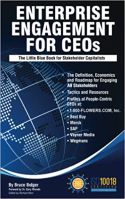
3. Books on implementation: Enterprise Engagement for CEOs and Enterprise Engagement: The Roadmap.
4. Advisory services and research: Strategic guidance, learning and certification on stakeholder management, measurement, metrics, and corporate sustainability reporting.
5. Permission-based targeted business development to identify and build relationships with the people most likely to buy.
Contact: Bruce Bolger at TheICEE.org; 914-591-7600, ext. 230.