

Yale Management Experts: Restoring Faith in Capitalism Starts With How Companies Create Value
The Challenge Is Management, Not Just Philosophy
Walmart: Connecting Employees, Customers and Investment
Starbucks: Looking Beyond Individual Financial Measures
Rio Tinto: Putting a Value on Trust
From Stakeholder Debate to Management Discipline
Click here to subscribe to the ESM weekly e-newsletter.
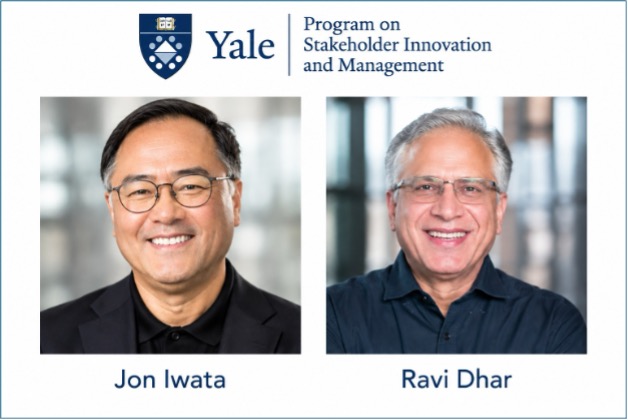 The debate over capitalism and stakeholders may have less to do with ideology than with management know-how, according to Ravi Dhar and Jon Iwata of the Yale School of Management.
In a recent commentary published by Yale Insights and originally published in Fortune, the authors contend that companies can strengthen long-term shareholder returns by systematically creating value for the employees, customers, partners and communities on which their businesses depend.
Their argument comes amid declining public support for capitalism. Citing Gallup research, the authors report that positive views of capitalism have fallen to 54%, the lowest level in the 15 years Gallup has tracked the measure. Dhar and Iwata suggest that part of the problem is a growing public perception that successful companies extract value from people rather than create it with them.
The Challenge Is Management, Not Just Philosophy
Dhar, a professor of management and marketing and co-faculty leader of Yale's Program on Stakeholder Innovation and Management, and Iwata, a leader of the same program, say their conclusions draw in part on interviews with more than 200 CEOs over six years. According to the authors, these executives generally do not see creating value for stakeholders as conflicting with shareholder interests. Instead, they view customers, employees, partners and communities as interconnected contributors to sustainable financial performance.
The more difficult issue is implementation. Many CEOs interviewed by Yale reportedly said they had not been adequately prepared for the challenge of managing these relationships together. In the authors' words, the problem is less one of ideology than of "know-how." They highlight Walmart, Starbucks and Rio Tinto as examples.
Walmart: Connecting Employees, Customers and Investment
When Doug McMillon became CEO of Walmart in 2014, the company faced declining comparable-store sales, customer satisfaction issues, high employee turnover and growing competition from Amazon. According to Dhar and Iwata, Walmart concluded that these problems were interconnected. The company made multi-year investments in employees, e-commerce, technology, lower prices and store operations despite the effect on short-term earnings.
The strategy initially met significant investor resistance. Yet by February 2026, Walmart had become the first traditional retailer to surpass $1 trillion in market value. The authors cite the case as evidence that employee, customer and shareholder interests do not automatically align; management has to deliberately design a business model that connects them.
Starbucks: Looking Beyond Individual Financial Measures
The authors use Starbucks to illustrate the risks of making decisions that appear financially logical individually while overlooking their combined impact on employees and customers. Charges for non-dairy milk generated revenue. Reduced amenities lowered costs. A larger menu and mobile ordering expanded convenience and choice. Taken together, however, Dhar and Iwata argue that these decisions increased complexity for employees while weakening aspects of the customer experience.
Since becoming CEO in 2024, Brian Niccol has simplified the menu and store operations, restored some customer amenities and committed an additional $500 million to labor and staffing. The authors report that Starbucks subsequently achieved four consecutive quarters of comparable-sales growth, while its shares had risen more than 22% since Niccol took over at the time their article was written. As to Sept. 21, 2026, the company's stock has risen about 4% versus nearly 40% for the S&P 500.
Rio Tinto: Putting a Value on Trust
The third example focuses on intangible assets that traditional accounting does not necessarily capture. Following Rio Tinto's 2020 destruction of the ancient Juukan Gorge rock shelters in Australia, the company faced intense criticism from Indigenous groups, governments and investors. Three senior executives, including the CEO, ultimately departed.
Dhar and Iwata say the company's subsequent leadership treated rebuilding community trust as a management capability rather than simply a public relations issue, investing in community engagement, cultural expertise and governance. The authors point to the case as an example of how trust, culture and what is sometimes called a company's "social license to operate" can influence its ability to create financial value.
From Stakeholder Debate to Management Discipline
Their broader conclusion is that stakeholder management need not be framed as a debate over distributing profits among competing groups. Dhar and Iwata argue that Walmart, Starbucks and Rio Tinto still must control costs, grow profits and generate shareholder returns. The distinction is in how management identifies and strengthens the relationships among employees, customers, communities and other stakeholders that contribute to those results.
Their conclusion shifts the discussion away from whether companies should serve shareholders or stakeholders and toward answering how effectively management creates value through all the people whose decisions ultimately determine an organization's success? In that sense, declining confidence in capitalism may be as much a management challenge as a political or economic one. The authors contend that the knowledge needed to address it already exists. The next challenge is making that capability a standard part of management practice.
Enterprise Engagement Alliance Services
 Celebrating our 18th year, the Enterprise Engagement Alliance helps organizations enhance performance through:
1. Information and marketing opportunities on stakeholder management and total rewards:
- ESM Weekly on stakeholder management since 2009. Click here to subscribe; click here for media kit.
- RRN Weekly on total rewards since 1996. Click here to subscribe; click here for media kit.
- EEA YouTube channel on enterprise engagement, human capital, and total rewards since 2020
 Management Academy to enhance future equity value for your organization.
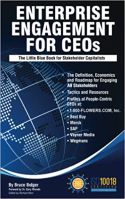
3. Books on implementation: Enterprise Engagement for CEOs and Enterprise Engagement: The Roadmap.
4. Advisory services and research: Strategic guidance, learning and certification on stakeholder management, measurement, metrics, and corporate sustainability reporting.
5. Permission-based targeted business development to identify and build relationships with the people most likely to buy.
Contact: Bruce Bolger at TheICEE.org; 914-591-7600, ext. 230.