

Benjamin Granger Joins EEA Impact Council to Advance Financial Measurement of Employee and Customer Experience
 The EEA’s Impact Council includes a growing number of professionals with differing areas of focus and expertise related to stakeholder engagement.
Connecting Employee and Customer Experience to Business Results
Why Financial Measurement Matters
Supporting the EEA's Measurement and Education Mission
Click here to subscribe to the ESM weekly e-newsletter.
Benjamin Granger brings expertise in employee experience, customer experience, and organizational research to the Enterprise Engagement Alliance’s effort to establish clearer connections between people management practices, customer outcomes, and financial performance across the enterprise.
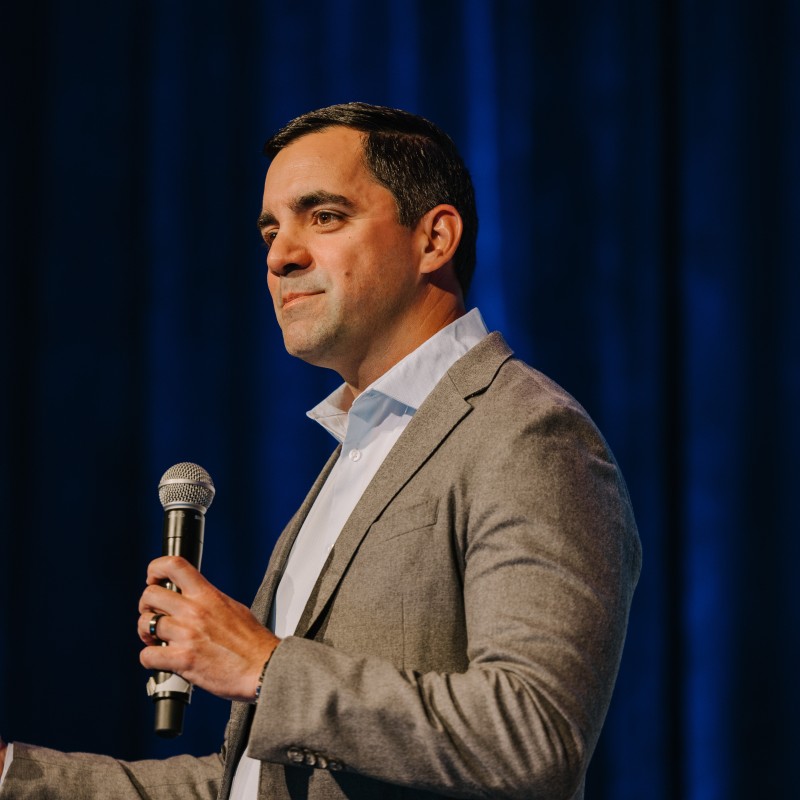
Granger, an organizational psychologist and recognized researcher in employee experience (EX) and customer experience (CX), is joining the Enterprise Engagement Alliance Impact Council as an advisor focused on strengthening the financial connection between employee and customer experience.
His participation supports the EEA's mission to bring greater discipline to how organizations measure the value created through people. A central objective is to help organizations move beyond employee engagement scores, customer satisfaction ratings, and other experience metrics to understand how these measures relate to revenues, profitability, and long-term enterprise value.
The underlying challenge is that employee and customer experience are generally managed by separate departments, with different metrics, budgets, and reporting structures. Human resources measures engagement, retention, and employee experience, while marketing and customer experience teams track satisfaction, loyalty, and customer behavior. Yet both functions ultimately contribute to the same business outcomes.
Granger's advisory role will focus on helping the EEA strengthen the evidence and measurement frameworks that connect these activities to financial performance, while distinguishing correlation from causation.
Connecting Employee and Customer Experience to Business Results
Research has long suggested that employee experience and customer experience are related, but demonstrating the financial implications requires more than comparing survey scores. Organizations must examine how employee behaviors, management practices, service quality, customer retention, productivity, and other factors interact over time.
This approach aligns with the EEA's emphasis on applying the principles of total quality management to stakeholder management. Rather than treating employee and customer engagement as independent initiatives, the goal is to understand their combined contribution to organizational performance.
A key priority is helping senior executives, investors, and functional leaders identify financial indicators that can reveal whether investments in employee and customer experience are creating measurable value. These indicators can include revenue and profit per employee, customer retention, productivity, and other measures appropriate to the business.
The objective is not to suggest that a single financial ratio can establish the effectiveness of an engagement initiative. Rather, financial benchmarks can identify performance differences that warrant investigation, while more detailed diagnostic and impact-measurement tools can help determine what is driving those differences.
Why Financial Measurement Matters
In a recent ESM interview with Granger, he discussed research into organizations that perform well financially while also achieving strong employee and customer outcomes. Depending on the study, he said, fewer than 10% of organizations fall into all three categories.
Granger, Chief Workplace Psychologist at Qualtrics, has more than 15 years of experience developing and advising on experience management programs. He is also the author of A Leader Worth Following. His work emphasizes leadership, trust, and the management practices that encourage employees to contribute to organizational success.
His research and advisory work have also examined the connections between employee and customer experience. Granger emphasizes treating EX and CX as part of a unified management system rather than separate functional responsibilities.
For the EEA, this expertise is particularly relevant to efforts to establish a common financial language for evaluating investments in people. The challenge is to make the business implications of employee and customer experience understandable not only to HR and marketing executives, but also to CEOs, CFOs, and investors.
Supporting the EEA's Measurement and Education Mission
The EEA was formed in 2009 following a decade of research at Northwestern University's Medill School of Integrated Marketing linking customer and employee engagement to financial results. Its mission is to help organizations apply the principles of total quality management to stakeholder management, with a focus on measurable value creation for investors through customers, employees, distribution and supply chain partners, and communities.
Granger's advisory participation will support the EEA's work in connecting research, practical management methods, and financial measurement.
The alliance advances this work through several activities and resources:
1. Research and insights. ESM's weekly newsletter, EEA YouTube programming, and an extensive reference library provide research, interviews, and practical guidance on stakeholder management and total rewards.
2. Practical education. The EEA's education program helps managers understand the economics and practical application of strategic stakeholder management.
3. Financial performance benchmarking. The free Enterprise Engagement Index uses publicly available financial information to compare employee and customer value creation with industry peers. The objective is to identify potential performance gaps for further investigation.
4. Stakeholder management assessment. A free, confidential 10-minute Stakeholder Management Assessment provides an initial assessment of management practices, with an option for more detailed analysis.
5. Impact measurement. The EEA People Value Impact Calculator helps organizations evaluate the financial impact of investments in human resources, marketing, distribution and supply chain management, and communities.
6. Enterprise Engagement Job Board. The EEA Engagement Job Board provides regularly updated employment opportunities in stakeholder engagement and related fields.
7. Free Monthly Contest to Validate the Business Impact of Engagement Programs. The EEA will independently and objectively validate up to one program submitted per month based on whether it is verified to achieve its purpose, goals, objective, values, and financial impact.
8. Annual management survey. The EEA aims to establish a national benchmark for strategic stakeholder management through an annual survey conducted by a credible research organization.
Moving from experience scores to financial accountability. Granger's involvement reflects a growing opportunity to connect the disciplines of employee experience, customer experience, organizational psychology, and financial management.
The objective is not simply to demonstrate that happier employees can contribute to happier customers. It is to develop a more systematic understanding of which management practices improve employee and customer outcomes, how those outcomes affect financial performance, and how organizations can use that information to make better investment decisions.
For the EEA, the longer-term opportunity is to make the financial implications of stakeholder management more accessible to senior executives and investors while providing managers with practical tools to improve results.
Enterprise Engagement Alliance Services
 Celebrating our 18th year, the Enterprise Engagement Alliance helps organizations enhance performance through:
1. Information and marketing opportunities on stakeholder management and total rewards:
- ESM Weekly on stakeholder management since 2009. Click here to subscribe; click here for media kit.
- RRN Weekly on total rewards since 1996. Click here to subscribe; click here for media kit.
- EEA YouTube channel on enterprise engagement, human capital, and total rewards since 2020
 Management Academy to enhance future equity value for your organization.
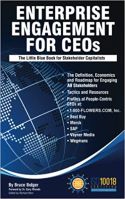
3. Books on implementation: Enterprise Engagement for CEOs and Enterprise Engagement: The Roadmap.
4. Advisory services and research: Strategic guidance, learning and certification on stakeholder management, measurement, metrics, and corporate sustainability reporting.
5. Permission-based targeted business development to identify and build relationships with the people most likely to buy.
Contact: Bruce Bolger at TheICEE.org; 914-591-7600, ext. 230.