

Engagement Programs Work and It Is Time to Demonstrate Their Impact
 Two case studies illustrate how the Enterprise Engagement Alliance’s impact measurement approach can help organizations document the value of channel engagement and employee recognition programs while identifying opportunities to improve results. The process is based almost always on easily available data that most organizations fail to use for the purpose of analyzing ROI of people investments.
By Bruce Bolger
Start With Objectives and Available Data
Channel Engagement After an Acquisition
Employee Recognition Across a Broader Workforce
Translate Findings Into Value and Better Decisions
Click here to subscribe to the ESM weekly e-newsletter.
 Well-designed incentive, recognition, learning, and other engagement programs work. The opportunity now is to demonstrate what they accomplish with the same management discipline applied to other business investments.
For organizations and their solution providers, this means taking promising case studies one step further. Participation, award activity, and sales results provide useful information. Connecting those results to the program’s objectives, the behaviors it encouraged and how, and the value it created makes the case for continued investment more compelling.
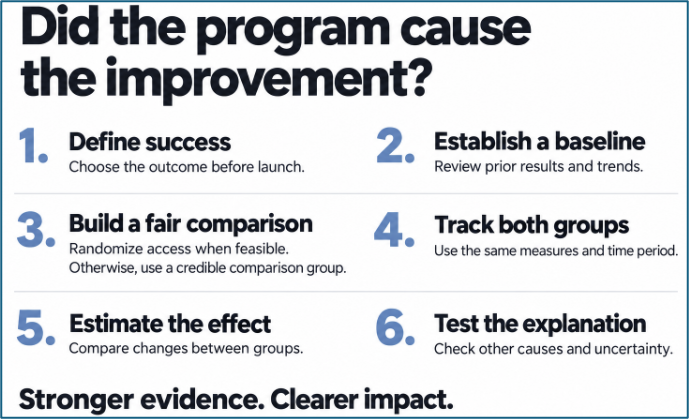
The Enterprise Engagement Alliance’s impact measurement approach starts with practical questions. What was the program intended to accomplish? What changed? How much of that change can reasonably be attributed to the program? What can the findings tell us about how to improve it?
Two case studies involving channel engagement and employee recognition demonstrate how this process can strengthen both the evidence and the programs themselves. Both these studies show promising results but do not establish that they were the results of the campaign. These case studies are anonymized analyses of award-winning industry case studies to demonstrate the opportunity to make them far more valuable in the C-suite by demonstrating a connection to performance. The programs are not named because the intent is not to criticize the organizations or discourage the publication of case studies.
Start With Objectives and Available Data
 The EEA’s program evaluation process for its free annual contest and clients seeking proof of ROI begins by reviewing the program’s purpose, goals, objectives, current evaluation practices, and available data. Its approach draws on measurement and continuous improvement principles commonly used in total quality management, including statistical process controls to track performance over time. It also includes data points from ISO human capital standards, human capital return on investment and value add; revenues and profits per employee, or, for channel programs, channel program return on investment and value add, revenues and profits per channel partners, etc.
The practical starting point is information the organization already collects. Depending on the program, this can include sales, margins, training completion, employee performance, turnover, referrals, and platform activity. Business objectives determine what matters. Available data determines what can credibly be measured today and where better data collection is needed.
A channel program intended to retain resellers after an acquisition should be evaluated on reseller retention and profitable business development as well as participation. An employee recognition program intended to improve performance and retention should connect recognition activity to those outcomes.
The evaluation establishes a baseline. The two case studies examined here call for at least 12 months of relevant historical records before the program, followed through the program period. This helps reveal seasonal patterns, existing performance differences, and trends that began before launch.
Where feasible, the analysis compares changes among participants with changes among similar nonparticipants. The important question is whether participants improved more than would otherwise have been expected.
These comparisons require care. Strong performers may be more likely to participate in training or receive recognition in the first place. Historical data and matched comparison groups help address that problem, but do not automatically establish causation. The strength of the conclusion must reflect the strength of the evidence, which is often best obtained by correlating activities with impact—did those who participate in training or recognition programs actually outperform those who did not. Fortunately for the recognition industry, the answer is often yes. Most organizations simply don’t take the time to measure it.
Channel Engagement After an Acquisition
In the first case study analyzed, XYZ Corp. sought to retain inherited resellers following an acquisition, protect revenue, meet a sales target exceeding $100 million, and encourage product training and engagement. The program combined interactive learning and certifications, volume-based incentives, expedited technical support, and targeted communications. Reported results included 3,900 participants and sales 35% above target. These are encouraging outcomes. They show substantial participation and a strong sales result. The next step is to establish how the program contributed.
Compare sales and retention against a credible baseline. To understand what really happened, review at least 12 months of reseller sales before launch and track results through the program period. Compare participating resellers with similar nonparticipants, accounting for prior sales, reseller size, product mix, and other relevant differences. Track whether inherited resellers remained active, because retention was a central objective.
Exceeding a target is useful business information, but a target alone does not show what sales would have been without the program.
Connect learning with subsequent performance. Compare resellers with high, partial, and no training completion. Examine whether sales performance changed after training, taking previous performance into account. If trained partners were already the strongest sellers, their higher sales alone would not demonstrate a training effect. If comparable partners improved after completing relevant modules, the evidence becomes more persuasive.
Examine how incentives influenced purchasing. Compare monthly sales patterns with incentive launches, deadlines, and rule changes. Look beyond a deadline spike to determine whether purchases increased overall or simply moved forward from a later period. Include margins and program costs in the evaluation.
These findings create specific opportunities for improvement. If training is associated with stronger subsequent results, the company can expand access or improve completion among partners with growth potential. If incentives largely reward existing volume, it can test rewards for incremental growth or strategically important behaviors. If technical support appears to help retain vulnerable accounts, it can examine that contribution more closely. The stronger case study would explain how the program helped retain partners and generate additional profitable business, as well as reporting participation and sales against target.
Employee Recognition Across a Broader Workforce
The second case involved a recognition program reaching approximately 3,000 employees. The organization shifted from large awards for a small number of people toward smaller, more frequent recognition across the workforce, working within an existing budget of approximately $55 per person.
The program included eCards, instant peer awards, milestone recognition, manager and ambassador training materials, and communications through multiple channels.
Within five months, 54% of employees had received awards, and peer recognition had increased by 50%.
These results indicate broader recognition activity. They provide a useful foundation for examining whether employees experienced more timely, fair, and consistent appreciation and whether the program contributed to organizational goals.
Define performance in terms relevant to the work. Use available measures such as output quality, productivity, human capital ROI or value ad, or goal attainment. Review historical performance and compare subsequent changes among employees or teams with different levels of program exposure. Recognition often follows good performance. The analysis therefore needs to distinguish performance that earned an award from improvement that followed recognition.
Track retention over a meaningful period. Connect recognition records with HR data on tenure and departures. Compare employees in similar roles and circumstances, accounting where possible for differences in managers, locations, and prior performance. Five months of recognition activity may provide an early signal; longer follow-up may be needed to evaluate retention.
Evaluate referrals where they support program objectives. Talent acquisition records can identify employee-referred candidates and hires. Customer introductions can be tracked through customer relationship management records where relevant. These measures should be included when they fit the program’s purpose and the available data supports a useful comparison.
The analysis can also reveal where the program needs attention. Are some departments or shifts receiving little recognition? Are managers participating consistently? Are awards connected to specific contributions that employees understand? If recognition is concentrated in a few teams, the organization can investigate access, communications, and manager practices. If frequent awards show little relationship to desired outcomes, it can review the relevance, timing, and meaning of the recognition. An existing fixed budget makes these questions especially useful: better design can improve the value of the investment.
Translate Findings Into Value and Better Decisions
For both cases, the evaluation should distinguish program activity, changes in behavior, and business outcomes. Where the evidence supports financial estimates, incremental sales should be translated into contribution rather than treated entirely as profit. Retention benefits should use documented cost assumptions. Program costs should include rewards, technology, administration, communications, training, and relevant staff time. Benefits should not be counted twice.
Some outcomes will remain valuable without a defensible dollar estimate. Reporting them clearly is more useful than forcing every result into an ROI calculation. Neither case study, as currently reported, establishes incremental impact. Both offer promising results and a practical starting point for demonstrating it.
That is the opportunity for the engagement field. Organizations already invest in these programs because they expect people to respond to useful learning, meaningful recognition, appropriate incentives, and effective support. Measurement helps show where that expectation is being fulfilled, how much value is being created, and what should change.
These programs work when they are designed and implemented effectively. It is time to make demonstrating their contribution—and improving it—part of the program itself.
Enterprise Engagement Alliance Services
 Celebrating our 18th year, the Enterprise Engagement Alliance helps organizations enhance performance through:
1. Information and marketing opportunities on stakeholder management and total rewards:
- ESM Weekly on stakeholder management since 2009. Click here to subscribe; click here for media kit.
- RRN Weekly on total rewards since 1996. Click here to subscribe; click here for media kit.
- EEA YouTube channel on enterprise engagement, human capital, and total rewards since 2020
 Management Academy to enhance future equity value for your organization.
3. Books on implementation: Enterprise Engagement for CEOs and Enterprise Engagement: The Roadmap.
4. Advisory services and research: Strategic guidance, learning and certification on stakeholder management, measurement, metrics, and corporate sustainability reporting.
5. Permission-based targeted business development to identify and build relationships with the people most likely to buy.
Contact: Bruce Bolger at TheICEE.org; 914-591-7600, ext. 230.