

Anthropic's Public Benefit Corporation Structure Requires Audits to Affirm Stakeholder Capitalism as a Way to Manage AI Risks
 As one of the world's leading AI companies prepares to enter the public markets, its commitment to a governance model that considers investors, stakeholders, and society reinforces the relevance of stakeholder capitalism. Independent auditing and international standards will be essential to making these commitments meaningful.
By Bruce Bolger
Stakeholder Capitalism as Risk Management
The Missing Ingredient: Independent Verification
International AI Standards Offer a Practical Solution
From Corporate Purpose to Measurable Accountability
Click here to subscribe to the ESM weekly e-newsletter.
The decision by Anthropic, San Francisco-based developer of the Claude AI platform, to retain its public benefit corporation (PBC) structure as it prepares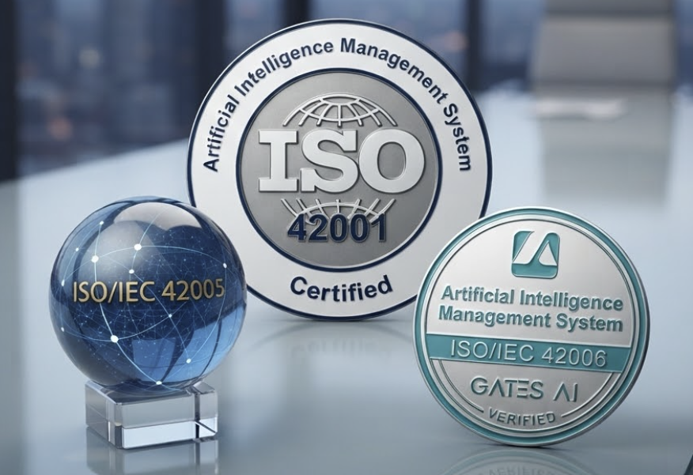 for an initial public offering is a significant affirmation of stakeholder capitalism principles at a time when artificial intelligence is raising unprecedented questions about corporate responsibility and risk management. On the other hand, without independent audits of its practices, the structure risks being more of a public relations or legal gambit than a sincere effort to put it on the path of value creation rather than societal destruction.
The decision demonstrates the fundamental principle to focus on enhancing returns for investors only by creating value for customers, employees, distribution and supply chain partners, communities and the environment. On the other hand, it’s not enough. Without auditable standards, having a benefits corporation standard does not address all the issues involved with implementing the principles of stakeholder capitalism in the world of AI.
As Reuters explains in its examination of Anthropic's legal structure, public benefit corporations are legally required to consider more than shareholder financial returns. Their directors must balance investors' interests with the interests of stakeholders materially affected by corporate conduct and the organization's stated public benefit. Because of this public announcement, investors can choose whether this method of organization aligns with their investment interests.
Anthropic's stated purpose is the responsible development of advanced AI for humanity's long-term benefit. Its governance arrangements include a Long-Term Benefit Trust intended to help preserve that mission, even as the company seeks capital and competes in a rapidly expanding marketplace.
The significance extends beyond Anthropic. OpenAI Group has also adopted a public benefit corporation structure. Two of the most prominent developers of advanced AI have therefore embraced legal frameworks recognizing that the interests of shareholders cannot be considered in isolation from the consequences of their technologies for other stakeholders.This is all well and good unless stakeholders have some means of being assured that these pledges indeed get met in actual practice.
Stakeholder Capitalism as Risk Management
The importance of this development is not simply philosophical. AI introduces risks affecting employees, customers, investors, communities, governments, and potentially society as a whole. These include privacy violations, discrimination, misinformation, cybersecurity threats, workforce disruption, and the unintended consequences of increasingly autonomous intelligent systems whose very nature creates continued risks not unlike those of viruses in medicine—continually evolving highly intelligent systems to maintain their own survival.
Stakeholder capitalism provides a management framework for identifying these risks because it requires companies to consider how their decisions affect the people and organizations upon whom their long-term success depends. The business case is straightforward. A company that fails to anticipate harm to customers, employees, business partners, or society can expose itself to litigation, regulatory intervention, reputational damage, loss of trust, and potentially significant financial consequences over the longer term.
Rather than viewing stakeholder interests as competing with shareholder value, a systematic approach to stakeholder management can help organizations identify and address risks before they become crises.
Anthropic's governance model is particularly noteworthy because its Long-Term Benefit Trust is intended to provide independent oversight of the company's mission. According to its securities filings, the trust has the authority, through a special class of shares, to elect and remove directors who together constitute a majority of the authorized board. This represents an effort to embed stakeholder considerations into corporate governance rather than relying exclusively on voluntary commitments.
The Missing Ingredient: Independent Verification
There is, however, an important limitation to the public benefit corporation model. As Reuters points out, Delaware law does not require independent auditing of whether a PBC fulfills its public mission. This distinction is critical. A public benefit corporation is a legal structure, not a certification of responsible corporate performance.
That is where the experience of B Lab, the nonprofit organization behind B Corp Certification, becomes relevant. Unlike PBC status alone, B Corp Certification requires companies to demonstrate compliance with independently verified standards covering social, environmental, and governance practices.
B Lab's certification framework has evolved to strengthen independent verification. Under its updated standards, third-party assurance providers audit participating companies against defined requirements, rather than relying solely on corporate declarations. The distinction illustrates a central challenge facing stakeholder capitalism: commitments become more credible when organizations can demonstrate that they have implemented effective management processes and subjected their performance to independent scrutiny.
As B Lab explains in its discussion of third-party certification, independent assurance is intended to keep certification credible and trustworthy. The lesson for AI governance is particularly important. Public benefit corporation status may establish a company's legal responsibilities, but it does not by itself demonstrate that its AI systems are being managed safely or responsibly.
International AI Standards Offer a Practical Solution
A parallel development may help address this challenge. As reported in a recent Enterprise Engagement Strategies article, "International AI Standards Are Taking Shape: A New Certification Shows Both Their Promise and Their Limits", the International Organization for Standardization (ISO) and International Electrotechnical Commission (IEC) are developing a comprehensive framework for AI governance.
Three standards are particularly relevant:
-
ISO/IEC 42001:2023 establishes requirements for an AI management system, including accountability, risk assessment, monitoring, and continual improvement.
-
ISO/IEC 42005:2025 provides guidance for assessing the effects of AI systems on individuals and organizations.
-
ISO/IEC 42006:2025 establishes requirements for organizations auditing and certifying AI management systems.
These standards provide a practical way to translate stakeholder capitalism principles into management practices that can be evaluated independently. The importance of this effort is underscored by its international scope. The ISO/IEC AI standards process involves national standards bodies from countries with widely differing economic and political systems, including the United States and China.
The standards do not guarantee that an AI system will be safe, nor can they replace government regulation. They do, however, provide a common foundation for documenting responsibilities, assessing risks, and evaluating management practices. This approach is already entering commercial markets. As the earlier ESM report documented, Loyalty Juggernaut, a provider of AI-enabled loyalty technology, announced certification of its AI management system to ISO/IEC 42001 by the British Standards Institution. Major technology companies, including Microsoft, Google Cloud, Amazon Web Services, and IBM, have also announced AI management system certifications covering specified operations or products.
From Corporate Purpose to Measurable Accountability
The convergence of these developments suggests a practical path forward for stakeholder capitalism. Public benefit corporation laws can establish an organization's responsibility to consider the interests of stakeholders. Stakeholder management practices can help identify risks and opportunities across the enterprise. International management standards can provide the processes, documentation, and independent verification necessary to determine whether those responsibilities are being taken seriously. None of these mechanisms is sufficient by itself. Corporate governance structures cannot guarantee ethical decisions, certification cannot eliminate all risks, and voluntary standards cannot substitute for effective public oversight.
Nevertheless, Anthropic's decision to preserve its public benefit corporation structure as it approaches the public markets is an important development. It demonstrates that one of the world's most consequential technology companies considers stakeholder responsibilities sufficiently important to incorporate them into its legal and governance structure.
The next big challenges? Will this decision attract or discourage investors, and how will the company make these commitments measurable, independently verifiable, and meaningful in everyday management decisions.
Enterprise Engagement Alliance Services
 Celebrating our 18th year, the Enterprise Engagement Alliance helps organizations enhance performance through:
1. Information and marketing opportunities on stakeholder management and total rewards:
- ESM Weekly on stakeholder management since 2009. Click here to subscribe; click here for media kit.
- RRN Weekly on total rewards since 1996. Click here to subscribe; click here for media kit.
- EEA YouTube channel on enterprise engagement, human capital, and total rewards since 2020
2. Learning: Purpose Leadership and Stakeholder Management Academy to enhance future equity value for your organization.
3. Books on implementation: Enterprise Engagement for CEOs and Enterprise Engagement: The Roadmap.
4. Advisory services and research: Strategic guidance, learning and certification on stakeholder management, measurement, metrics, and corporate sustainability reporting.
5. Permission-based targeted business development to identify and build relationships with the people most likely to buy.
Contact: Bruce Bolger at TheICEE.org; 914-591-7600, ext. 230.