

South Carolinas Growth Honorees Make the Business Case for Stakeholder Management Without Using the Name
How the Companies Were Selected
The Stakeholder Connection
Why This Is Better Business
Click here to subscribe to the ESM weekly e-newsletter.
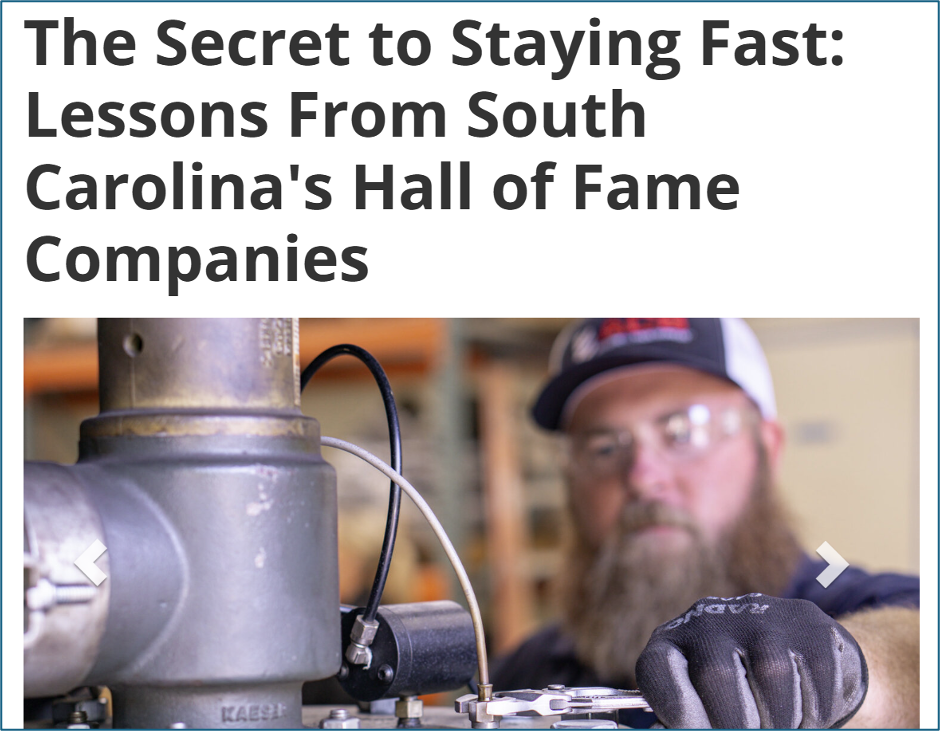
An article in Greenville Business Magazine, “The Secret to Staying Fast: Lessons From South Carolina’s Hall of Fame Companies,” describes a familiar formula for sustainable business performance without mentioning stakeholder management: develop employees, strengthen customer relationships, adapt operations, and create opportunities in the communities that support the business.
Published Nov. 1, 2026, the article examines four companies among 28 inducted into the SC Fastest Growing Companies program’s new Hall of Fame. Qualification required appearing on the growth list at least five times. The distinction matters because these companies earned recognition for business results. Their explanations of how they sustained those results reflect the principles central to stakeholder management princples.
How the Companies Were Selected
 The South Carolina Business Awards program recognizes growth among private and publicly owned, for-profit businesses. Its published criteria distinguish the annual ranking from Hall of Fame recognition.
According to presenting organization The Capital Corporation, eligible companies must:
- Be headquartered in South Carolina.
- Have operated for at least three full fiscal years.
- Report at least $3 million in revenue in the most recent reported year, or $50 million in assets for financial institutions.
Companies can nominate themselves or be nominated by others. Applicants supply financial, employment, and company information. A Capital Corporation review panel evaluates the submissions for completeness and ranks companies based on the responses received. Sponsor representatives also conduct virtual visits with executives to discuss business successes and challenges. Participation carries no nomination fee, and submitted financial information remains confidential.
The program’s 2026 methodology statement specifies a weighted calculation of year-over-year growth in revenue, earnings, and employee headcount for 2023 through 2025. That statement provides more detail than general descriptions referring simply to financial and employment growth. It does not disclose the numerical weights. Hall of Fame membership adds a record of repeated achievement: five or more appearances on the annual list. Employee development, customer loyalty, and community involvement are practices described by the featured honorees; they are not identified as separately scored criteria for this growth ranking.
The Stakeholder Connection
The Enterprise Engagement Alliance’s approach centers on improving organizational performance and returns for owners by creating value for the customers, employees, business partners, and communities that contribute to success. Viewed through that framework, the honorees offer practical examples of stakeholder management at work. What makes the distinction more interesting is that the company’s are not selected on the basis of their business practices.
Here’s a summary of the winners and their practices.
Global Lending Services: connecting employees, customers, and distribution partners. Global Lending Services describes a business serving both borrowers and automobile dealerships, supported by technology and a culture of care. Its website explicitly connects its commitments to customers, employees, and communities with honest, fair, and transparent operations.
The stakeholder logic is clear: a financing business depends on the relationships among the people purchasing vehicles, the dealers arranging sales, and the employees delivering service. Managing those relationships together provides a practical framework for creating business value.
Air Compressor Services: building capabilities around customer needs. In its own announcement of its fifth consecutive growth-list appearance, Air Compressor Services credits its team’s willingness to embrace change and improve service. The company describes investments in inventory, warehouse capacity, technology, and the customer experience.
Those investments connect employee capabilities and operating resources to a concrete customer objective: keeping machinery running. Its account illustrates how stakeholder thinking can guide everyday decisions about service, purchasing convenience, and capacity.
Elite Home Care, Day Centers, and Transportation: organizing services around people’s lives. Elite Home Care combines home care, day centers, and transportation. Its Charleston service descriptionconnects that offering to participants’ individual needs, family caregiver respite, healthcare partners, and community resources.
.png) The business model demonstrates the value of understanding a network of stakeholders. A participant’s experience depends on more than an individual service encounter; transportation, family circumstances, access, and coordination all matter. Addressing those connections creates a broader opportunity to serve.
Blue Haven Pools & Spas: linking recognition with customer continuity. The Greenville Business Magazine report describes employee recognition and retention at Charleston-based Blue Haven Pools & Spas as elements of its growth strategy. It also reports investments in customer visualization and operational coordination. The management implication: retaining experienced people and equipping them to deliver consistent service can support the customer relationships on which expansion depends.
Why This Is Better Business
These examples support ESM’s central argument that stakeholder management is a practical approach to running a business. Employee development builds capabilities. Customer understanding guides innovation. Coordination helps an expanding organization deliver on its promises. Community relationships connect a company with the people and institutions supporting its operations.
For management, the next step is to measure those connections. It should track whether development improves retention and internal advancement; whether service investments improve customer retention and referrals; and whether operational improvements reduce delays, complaints, and rework. It can connect those measures to earnings and growth.
The awards establish repeated growth performance. The companies’ accounts describe practices they believe helped produce it. Together, they offer persuasive business examples, although they do not isolate stakeholder management’s causal contribution or prove that every stakeholder-oriented company outperforms its competitors.
Their practical message remains compelling: investing in the people and relationships that create enterprise value is a business strategy. These honorees demonstrate why companies can practice stakeholder capitalism successfully without ever adopting the name.
Enterprise Engagement Alliance Services

Founded in 2009, the Enterprise Engagement Alliance helps organizations create measurable value through people by aligning employees, customers, partners, and other stakeholders around a shared purpose, goals, and values. Explore EEA services and membership options.
1. News, research, and marketing opportunities
-
ESM Weekly: Stakeholder management and enterprise engagement coverage since 2009. Subscribe | Media kit.
-
RRN Weekly: Total rewards and recognition coverage since 1996. Subscribe | Media kit.
-
EEA YouTube channel: Enterprise engagement, human capital, and total rewards programs since 2020.

2. Membership, learning, and certification
The EEA Impact Academy teaches a systematic approach to aligning people, purpose, and performance. Complimentary Professional Management Membership is available to qualified corporate executives and managers, professors, and educators. Paid Corporate and Solution Provider memberships support team learning and professional development. Explore learning and registration.
3. Books and implementation resources
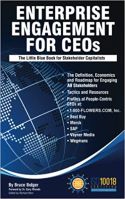
Enterprise Engagement for CEOs introduces the framework for senior leaders.
Enterprise Engagement: The Roadmap provides a practical implementation framework.
4. Advisory services, assessments, and impact analysis
Advisory services and research support stakeholder management and implementation. EEA resources include the Enterprise Engagement Index, People Value Impact Calculator, and independent analysis of engagement, incentive, recognition, loyalty, and related initiatives.
5. Permission-based targeted business development
Strategic communications and business development services help identify and build relationships with the people most likely to buy through combined newsletters, thought leadership, and social media.
Contact: Bruce Bolger at TheICEE.org; 914-591-7600, ext. 230.