

Corporate Accountability Should Begin With Disclosure, Not Stateholder Capitalism
 By Bruce Bolger
An Admirable Objective, a Sweeping Mechanism
The Difficulty of Mandating Stakeholder Capitalism
A Better Starting Point: Disclosure
Accountability That Is Fair to Business
Make Corporate Consequences Visible
Should the federal government force large companies to practice stakeholder capitalism? Encourage it yes; impose it, no. Stateholder capitalism refers to efforts to impose stakeholder capitalism through law or regulation, making government the arbiter of which stakeholder interests businesses must serve.
Sen. Elizabeth Warren first introduced the Accountable Capitalism Act in 2018 and reintroduced it in 2024. Two years later, with Warren expected to chair the Senate Banking Committee beginning in January 2027, another attempt is a reasonable possibility, although she has not announced one. I agree with almost all the bill's objectives and much of its substance, but its governance mandates go too far. Before reviving it, she should consider requiring large companies to disclose their material effects on stakeholders—a more proportionate approach that could build on existing European Union reporting obligations by large enterprises without rewriting corporate purposes, directors’ duties, or board election rights. At least several hundred US companies will have to comply with the law, so far with little notable resistance. Many of these would be the same large companies subject to Sen. Warren’s proposed legislation.
An Admirable Objective, a Sweeping Mechanism
 The 2024 version of Warren’s bill would require covered businesses with more than $1 billion in annual gross receipts to obtain federal charters. Directors would have to balance shareholders’ financial interests with those of people materially affected by the business. Employees would elect at least 40% of directors. The proposal also includes restrictions on executive stock sales and approval requirements for corporate political spending.
These provisions address legitimate concerns. Employee participation can improve the information reaching boards, and incentives that encourage longer investment horizons have considerable merit. The bill also preserves business judgment protections and limits enforcement of its stakeholder obligations.
Nevertheless, its central mechanism represents a substantial change in corporate law. It would establish a federal requirement to pursue public benefit and balance competing interests, accompanied by a redistribution of authority related to board selection. In effect, it would require covered companies to practice stakeholder capitalism, when public benefits corporate statutes already give organizations in about 40 states the right to establish stakeholder capitalism principles in their operating charters.
The proposed would likely unleash a fire storm of opposition from conservatives and related attorneys and end up delaying stakeholder capitalism yet again by opening up legal cans of words with imprecise legal requirements.
The Difficulty of Mandating Stakeholder Capitalism
 Businesses routinely make decisions involving competing interests. Investing in automation may improve productivity while eliminating jobs. Paying suppliers more may require higher consumer prices. Keeping a facility open may preserve employment while prolonging environmental damage. A legal requirement to balance these interests raises difficult questions about how directors should weigh them and how their decisions should be evaluated.
Even with protections for directors, a broad mandate could introduce additional disputes about corporate purpose and make accountability harder to define. Stakeholder management based on a clear organization purpose, goals, objectives and values can be a sound business strategy. Strong relationships with employees, customers, suppliers, and communities can support durable financial performance. Turning that approach into a federal governance requirement, however, opens questions that agreement with its objectives does not resolve.
A Better Starting Point: Disclosure
European Union’s Corporate Sustainability Reporting Directive offers a useful starting principle. Companies with a significant impact on society and the
.jpg) environment should disclose both how sustainability issues affect their business and how their activities affect people and the environment, and vice-versa. The principle is simple: all companies have a right to conduct their affairs according to the law, but larger organizations whose actions can have a significant impact on society and the environment need at least to disclose the risks and opportunities they create for society through their impact on employees, customers, distribution and supply chain partners, communities and the environment.
This approach, known as double materiality, recognizes that a cost can matter to society before it becomes a financial liability for the company creating it. Pollution, for example, may impose costs on a community that do not appear fully in the producer’s accounts. An American framework should require companies with the scale and capacity to impose substantial outside costs on to society to explain their material effects on employees, customers, distribution and supply chain partners, communities, and the environment. It should also disclose how those relationships create risks and opportunities for the business and its stakeholders and shareholders.
Employee benefits belong in that account as well. Workforce development, safer products, reliable supplier relationships, and efficient resource use can create value for society and shareholders. Credible reporting would make those contributions visible alongside the costs.
Accountability That Is Fair to Business
 A disclosure requirement along the lines of the EU CSRD would preserve management’s authority to choose lawful business strategies while giving affected people better information about their consequences. If essentially consistent with the well-deliberated EU CSRD, it would create minimal additional costs to the many large US companies that now or soon must comply with the law and produce annual, independently audited reports. Importantly, the EU CSRD requires independent auditing of annual filings.
Investors could assess exposure more accurately. Employees, customers, and business partners could make better-informed decisions. Communities and policymakers could identify where existing protections fall short. Comparable reporting could also benefit responsible large companies. Businesses that invest in reducing harmful impacts may receive little recognition when competitors can leave similar costs undisclosed. Consistent disclosure would help people distinguish between them.
For major companies already subject to European reporting obligations, a compatible American framework could build on existing systems and information. Aligning definitions and reporting requirements would help limit duplication and additional expense. The requirements would still need discipline. Reports should focus on material issues, use understandable measures, explain uncertainty, and receive proportionate independent assurance. Smaller suppliers should be protected from excessive information demands passed down by larger customers, as has occurred in Europe
Europe’s experience provides a caution. Its 2026 changes narrowed the CSRD’s scope and sought to reduce compliance burdens. The United States should draw on the reporting principle while designing requirements suited to its economy and legal system.
Make Corporate Consequences Visible
Disclosure will not eliminate harmful conduct. Environmental, labor, consumer protection, and competition laws still require effective enforcement. Reporting can provide evidence for better decisions and more targeted policy.
Sen. Warren deserves credit for insisting that corporate success be considered alongside its wider consequences. Before reviving a broad revision of corporate governance, she should pursue a disclosure framework that makes those consequences visible. A business with the ability to shift substantial costs onto society should, at a minimum, have to account publicly for them.
Enterprise Engagement Alliance Services

Founded in 2009, the Enterprise Engagement Alliance helps organizations create measurable value through people by aligning employees, customers, partners, and other stakeholders around a shared purpose, goals, and values. Explore EEA services and membership options.
1. News, research, and marketing opportunities
-
ESM Weekly: Stakeholder management and enterprise engagement coverage since 2009. Subscribe | Media kit.
-
RRN Weekly: Total rewards and recognition coverage since 1996. Subscribe | Media kit.
-
EEA YouTube channel: Enterprise engagement, human capital, and total rewards programs since 2020.

2. Membership, learning, and certification
The EEA Impact Academy teaches a systematic approach to aligning people, purpose, and performance. Complimentary Professional Management Membership is available to qualified corporate executives and managers, professors, and educators. Paid Corporate and Solution Provider memberships support team learning and professional development. Explore learning and registration.
3. Books and implementation resources
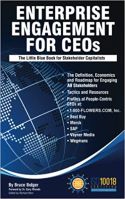
Enterprise Engagement for CEOs introduces the framework for senior leaders.
Enterprise Engagement: The Roadmap provides a practical implementation framework.
4. Advisory services, assessments, and impact analysis
Advisory services and research support stakeholder management and implementation. EEA resources include the Enterprise Engagement Index, People Value Impact Calculator, and independent analysis of engagement, incentive, recognition, loyalty, and related initiatives.
5. Permission-based targeted business development
Strategic communications and business development services help identify and build relationships with the people most likely to buy through combined newsletters, thought leadership, and social media.
Contact: Bruce Bolger at TheICEE.org; 914-591-7600, ext. 230.