

An Awkward Davos Question: What Happened to the WEF's Stakeholder Capitalism?
Were the World Economic Forum serious about its foundational purpose, this year’s Davos program could address this confusion and implementation challenges that delay practical responses to capitalism’s real problems: short-termism, misaligned incentives, and the neglect of people and communities who sustain and optimize enterprise value. That the World Economic Forum is silent on its principle purpose suggests that Davos has become nothing more than a trade show and conference for the world’s elite and not a catalyst for improving the world consistent with its claims.
By Bruce Bolger
The Debate Ignored by Davos 2026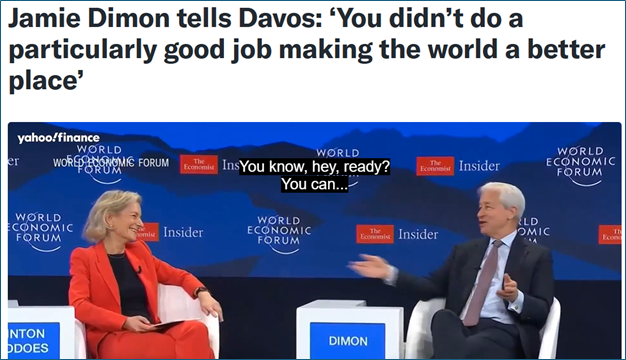
A Debate Without a Definition
A Concept Much Older Than the Controversy
2020–2021: When the Term Escaped Its Roots
The Backlash—and the Missing Definition
The Regulatory Irony
Practitioners Rarely Brag
The Absurdity at the Center of the Story
What Will Drive Real Change
The Growing Distaste for Capitalism
What Will Prompt Business Journalists to Ask the Right Questions
Click here to subscribe to the ESM weekly e-newsletter.
As the World Economic Forum ends its annual Davos conference this week, it could have claimed credit for having helped promote the concept of stakeholder capitalism in its 1973 Davos manifesto: “The purpose of professional management is to serve clients, shareholders, workers and employees, as well as societies, and to harmonize the different interests of the stakeholders.” It could have held practical sessions on its economics, implementation frameworks, challenges with case studies from leading practitioners like ASML, Delta Airlines, Costco. Instead, the focus is dialog about all the topics already being covered daily in the world’s business media and events.
Peter S. Goodman’s report on Davos at its kickoff this year in the New York Times provides part of the answer. He points out that the former proponents of stakeholder capitalism, such as Larry Fink and Marc Benioff, have gone silent now. What Goodman overlooks is that stakeholder capitalism isn’t just supposed to be a topic at the event, the Davos Manifesto is the founding principle of the World Economic Forum.
The slogan of the forum, he writes, “’Committed to Improving the State of the World,’ has long encapsulated the reason for doubt. People with the greatest stake in the status quo — billionaire executives who run the largest banks and technology companies — are cast as change agents, uniting with world leaders to pursue the betterment of humanity."
“This is the death of Davos,” Mark Blyth tells Goodman in the article. Blyth is a political economist at Brown University. “It has no relevance, none whatsoever. And the bigger question is, did it ever have relevance outside the chattering classes that were embedded in the status quo to start with?”
Given the results of the World Economic Forum’s efforts to promote stakeholder capitalism, Blyth has a point. It remains the world’s most prestigious business networking event and a stage for CEOs and other business leaders to show off, but nothing on the agenda suggests it is true to its commitment to “improve the state of the world,” let alone promote its founding principle. For more information on how and why the World Economic Forum has never used its clout to advance stakeholder capitalism, click here.
The Debate Ignored by Davos 2026
Despite the enormous media interest in the Davos conference, the World Economic Forum has played only a small role in advancing a field it helped name 53 years ago. While this year’s WEF event is silent on the subject it helped name, more than half a century after it entered the corporate lexicon, stakeholder capitalism remains debated across the global economic landscape. The author of a recent article in Thailand’s Krungthep Turakij asserts that stakeholder theory continues to underpin the elite dialogue at the World Economic Forum in Davos, along with topics on managing AI disruption and trade fragmentation. In contrast. Terry Keely, writing recently in RealClearWorld, argues the moment has come to abandon the model altogether, framing stakeholder capitalism and ESG as distortions of market accountability.
From Canada, a recent article in Corporate Knights disagrees. It says companies perform best when care for employees, customers, and communities precedes profit. Meanwhile, an article in World Finance questions whether shareholder primacy has hollowed out capitalism’s moral core, while the US policy conservative outlet, The Heartland Institute, encourages legislative and legal pushback against ESG in pension investing. Taken together, these sharply divergent perspectives—spanning business journalism, policy commentary, and international finance—underscore that stakeholder capitalism is not settled doctrine, but a live and unresolved debate potentially shaping the future of markets worldwide whose principles are barely known or understood.
Meanwhile, there is not a word about the topic in Davos.
A Debate Without a Definition
One of the more curious intellectual episodes in the journey of stakeholder capitalism is the intensity with which “stakeholder capitalism” is promoted or attacked by critics who rarely pause to define what they are supporting or opposing. From the Wall Street Journal editorial page to policy papers at the Heritage Foundation, and from academic critiques by Lucian Bebchuk, Professor at Harvard Law School, to populist commentary across business media, stakeholder capitalism is portrayed as everything from covert socialism to corporatist rent-seeking to a scheme for redistributing shareholder wealth to “woke” elites. On the progressive side, the New York Times economic reporter Peter S. Goodman skewered the concept as nothing but pure virtue-signaling in his book Davos Man.
Despite its clout, the World Economic Forum has done little to push back or stand up to the rhetoric by supporting research or sharing practical effective practices at Davos each year.
No where in the media can anyone find an article providing a history of the field, except for the Stakeholder Capitalism Primer, created by the Enterprise Engagement Alliance. Was there ever a session at Davos on the history of the field it claims as its primary mission?
In August 2020, Forbes published this definition created by me, Alex Edmans of the London Business School and Martin Whittaker, CEO of JUST Capital, based on a review of almost 60 years of research and reporting on the subject: "Enhancing returns for investors only by creating value for customers, employees, distribution and supply chain partners, communities and the environment." The vast majority of published work on and application of stakeholder capitalism in business focuses on how to enhance sustainable organizational performance, not divert profits to social issues unrelated to an organization's purpose. In fact, companies that wish to prioritize social causes can incorporate as a B corporation in nearly 40 US states, half of them Republican-dominated.
Even Harvard Professor Lynn Paine's Harvard Business Review article examining the different definitions did not reach back in time to the movement's roots in the work of Peter Drucker, W. Edwards Deming, or R. Edward Freeman, Professor at the Darden School at the University of Virginia.
What almost never appears in these critiques is a formal definition. The term does not appear in any dictionary, despite significant usage. This omission matters, because stakeholder capitalism did not originate as a political slogan, a Davos fashion, or an ESG marketing construct. It emerged—slowly and pragmatically—from decades of management practice, strategic theory, and capital allocation decisions aimed at building resilient, innovative firms over long-time horizons.
Definitions matter. Both Peter Goodman and Wayne Winegarden, a Senior Research Fellow at the Pacific Research Institute and opponent, told me that they would approve of stakeholder capitalism were it based on the definition published by the Enterprise Engagement Alliance and its collaborators in Forbes. Both agreed that the die was cast, that the definition published in Forbes wouldn't stick, even though neither indicated any knowledge about the movement's long history.
A Concept Older Than the Controversy .jpg)
Long before the phrase “stakeholder capitalism” entered public discourse, its logic was embedded in the work of Peter Drucker, W. Edwards Deming, and R. Edward Freeman. Drucker consistently argued that the purpose of a business is to create a customer, not merely to maximize quarterly profits, and that employees were assets to be developed rather than costs to be minimized. W. Edwards Deming’s emphasis on long-term thinking, continuous improvement, and the responsibility of management to optimize the whole system—not just short-term profits—foreshadowed stakeholder capitalism by prioritizing the well-being of employees, customers, suppliers, and society alongside shareholders.
These ideas were never framed as moral appeals. They were operational realities. These managerial insights were given their earliest explicit strategic formulation by R. Edward Freeman. In 1984, Freeman published Strategic Management: A Stakeholder Approach, arguing that firms create more durable value when they harmonize the interests of key stakeholders—employees, customers, suppliers, financiers, and communities—rather than treating them as competing claimants on shareholder wealth. Freeman’s argument was not moralistic. It was strategic. As he later clarified, stakeholder theory describes how value is created, not how virtue is signaled.
This directly contradicts later claims that stakeholder capitalism is anti-shareholder or anti-market. Freeman assumed private ownership, competition, and profit as objectives. What he rejected was the belief that shareholder value can be sustainably maximized in isolation from the systems that produce it.
In 1986, the US Congress during the Reagan administration created the presidential Malcolm Baldrige National Quality Award. It is widely regarded as an effective stakeholder-capitalism framework because it evaluates organizations on long-term value creation across customers, workforce, suppliers, communities, and financial performance rather than on short-term shareholder returns alone. Ronald Reagan presented the first awards in 1987 to Motorola Inc., Westinghouse Electric Corp. Commercial Nuclear Fuel Division, and Globe Metallurgical Inc. (now known as Globe Specialty Metals, Inc.).
They received the first Malcolm Baldrige National Quality Award for demonstrating excellence in organizational performance through strong leadership, effective management systems, and a deep commitment to engaging, developing, and empowering their people to drive continuous improvement and quality results. Sounds like stakeholder management to me. (All three companies have either been acquired or substantially restructured, one as a result of private equity, another based on a major acquisition strategy.)
The award was created to spur innovation in US management and manufacturing to address the successful onslaught by Japan on US auto, appliances, audio and other major industries based on the principles of total quality management brought to Japan by W. Edwards Deming. It had nothing to do with “woke” capitalism.
During this period, companies like Costco, Whole Foods, Southwest Airlines, Nucor Steel and Starbucks embraced stakeholder capitalism principles, all putting an unusual focus on harmonizing the interests of all their stakeholders toward a common purpose other than hitting quarterly profit targets.
In 2005, a consortium of 15 major financial institutions—including Goldman Sachs, Deutsche Bank, and Credit Suisse—produced the UN-commissioned report Who Cares Wins, arguing that environmental, social, and governance factors could be financially material. Similarly, the B Corp movement, founded in 2006, embedded stakeholder considerations into governance structures to protect long-term value creation and mitigate risk.
2020–2021: When the Term Escaped Its Roots
The controversy arrived much later. In August 2019, the Business Roundtable’s statement on the Purpose of a Corporation became a lightning rod when it stated its members' commitment to leading their companies for the benefit of all stakeholders.At Davos in January 2021, stakeholder capitalism was briefly resuscitated as a central theme before discussions returned to inflation and geopolitics in the following years. Around the same time, BlackRock CEO Larry Fink’s annual letter reiterated BlackRock’s view that climate and governance risks are investment risks. Meanwhile, due to the apparent popularity of sustainability, ESG-labeled investment products proliferated—some rigorous, others opportunistic—fueling confusion between investment marketing and serious strategy, as well as creating a bunch of underperforming funds with no clear standards.
The Backlash—and the Missing Definition
Critics responded forcefully. In the Wall Street Journal, Harvard Law School Professors Lucian Bebchuk and Roberto Tallarita argued that stakeholder capitalism was largely symbolic and weakened accountability. The Heritage Foundation framed stakeholder capitalism as a threat to economic freedom. TIME described it as “enlightened shareholder capitalism,” highlighting definitional ambiguity. Academic and business literature noted that executives themselves interpret the concept inconsistently.
From the progressive side, New York Times report Peter S. Goodman scorned the hypocrisy in his book, Davos Man.
Across coverage in the Wall Street Journal, New York Times, Forbes, Fast Company, Fortune, and Harvard Business Review, ESG disclosure, DEI programs, corporate speech, and long-term management strategy were routinely collapsed into a single, undefined threat. In case I can yet find has anyone (other than the EEA) bothered to study the long history of the field or clearly define it. Somehow, journalists assumed that everyone understood the definition of a concept few people have even heard of today.
The Regulatory Irony
One irony often overlooked: under the first Trump administration, the SEC mandated—for the first time—explicit disclosure of human capital factors material to a company’s business. This was not ideological innovation. It was recognition that workforce quality and retention materially affect firm value. Every publicly held company in the US now provides to various degrees information on human capital issues they consider material to their organizations, providing fodder for journalists and investors seeking to better understand the materiality of people in the companies they write about or invest in. Many of these reports reveal in what they don't say hints of the questions investors should ask.
Practitioners Rarely Brag
While the debate occurs, practitioners largely ignore it. Companies such as Nucor Steel, ASML, Delta Air Lines, NVIDIA, Costco, and Wegmans quietly apply stakeholder-aligned practices without branding them. Click here for a growing list. You won't see their CEOs on the business talk shows or conference circuits touting stakeholder capitalism. Why would they encourage their competitors?
The Absurdity at the Center of This Story
The enduring absurdity is this: a vast body of commentary has been written attacking stakeholder capitalism without defining it, while some of the most successful firms in the global economy quietly practice its core principles without slogans or press releases.
Stakeholder capitalism, stripped of politics, is not a doctrine. It is a description of how complex firms actually create value over time. Value creation is more sustainable and generally less risky than value extraction—and firms that forget this risk destroying both. That stakeholder capitalism is good for society is another benefit, because it increases the number of people who can buy the free market's products and services.
That this observation could be mistaken for radicalism says a lot about the state of capitalism.
What Will Drive Real Change
The debate over stakeholder capitalism is shifting from abstract rhetoric to measurable outcomes, driven in part by investor pressure grounded in data and performance metrics. Innovative investment vehicles like the Harbor Human Capital Factor US Large Cap ETF (HAPI) — built with Irrational Capital’s Human Capital Factor® to score companies based on workforce engagement — have shown notable performance and interest from investors, suggesting that markets may reward firms with strong human capital practices. HAPI tracks companies with high human-capital scores and has outpaced broad benchmarks, pointing to a growing link between workforce health and equity value.
Similarly, JUST Capital’s stakeholder performance indexes and ETFs that prioritize companies scoring well on worker and societal metrics have delivered competitive returns relative to traditional benchmarks, reinforcing the idea that stakeholder value and shareholder returns are not mutually exclusive. Click here for links to these examples and more.
Change is also being reinforced in business education and executive development, with stakeholder and strategic management courses growing across platforms like Cornell eCornell and Coursera, and stakeholder theory increasingly integrated into curricula at institutions such as Yale and Harvard Business School. The Strategic Management Society of academics has a Stakeholder Strategy Interest Group.
Just this past week began, the latest edition of The Future of Capitalism, a global educational initiative co-founded by IESE Business School and Shizenkan University (大学院大学至善館)in Japan was launched. "The online program examines critical questions facing business at a time of profound transformation, from capital markets and ESG to purpose-driven management, the relationship between companies and society and how corporate value should be defined and measured."
Finally, a growing body of human capital analytics — from employee engagement systems to customer experience measurement — helps CEOs and investors connect stakeholder outcomes with financial performance. Research consistently shows that highly engaged employees and customers correlate with stronger profitability, innovation, and long-term value creation, offering a data-driven foundation for the practical adoption of stakeholder principles.
Together, these market forces, educational trends, and analytical tools suggest that stakeholder capitalism’s future will be shaped less by ideology and more by measurable performance and investor incentives — a shift that may finally bring clarity and progress to a debate long stalled by definitional confusion.
The Growing Distaste for Capitalism
Another force for change is the rising distaste for capitalism among a growing majority of Americans. An article published on Sept. 4, 2025 by The Heartland Institute, reporting on a Rasmussen Reports poll conducted in partnership with another conservative group StoppingSocialism.com, finds strong support for socialist ideas among younger American voters.
The survey of 1,201 likely voters aged 18–39 shows that 53% would like to see a democratic socialist win the 2028 presidential election, while 76% “somewhat” or “strongly” agree that major US industries such as health care, energy, and big technology should be nationalized. Support for a socialist outcome is linked primarily to economic concerns, especially high housing costs and perceptions that the economy benefits older, wealthier Americans and large corporations, the report asserts. According to a recent survey by JUST Capital, only 35% believe capitalism is working for the average American; yet, 80% believe capitalism can be a force for positive change.
What Could Prompt Business Journalists to Start Asking the Important Questions
- When investors start asking first — once earnings calls include human-capital and customer-loyalty questions from analysts, more journalists may mirror them.
- When if ever the topic starts trending on social media, usually because some headline influencer like Joe Rogan or Howard Stern embrace it -- it will get more focus because social media and prominent influencers now largely drives media coverage.
- When a scandal or market collapse exposes the blind spot — crises tied to ignored cultural or customer risks or like the 2008 financial crisis might increase visibility.
- When investors realize that stakeholder metrics move markets — as soon as employee, customer, and culture indicators visibly affect stock prices, more investors and journalists will follow the signal.
- When transparent rankings replace rhetoric — standardized, comparable benchmarks make stakeholder performance safer to ask about and easier to report.
- When young workers connect it to their lives — framing stakeholder issues as job quality, trust, and opportunity, not ideology, makes the story relevant.
- When CEOs recognize that people truly are their No. 1 asset — leaders who link people metrics directly to results lower the risk of having to answer uncomfortable questions and will make them more open to questions about their stakeholder engagement practices.
- When tools make it boringly measurable — dashboards turn “soft” issues into hard data, removing accusations of virtue-signaling or "warm and fuzzy" management.
- When it stops sounding like virtue — and starts sounding like execution.
- When the organizations supporting the concepts collaborate -- none of the major early proponents of the concept, including Alex Edmans of the London Business School, JUST Capital, R. Edward Freeman, the Economics of Mutuality Alliance, Conscious Capitalism, Council for Inclusive Capitalism, have shown any enthusiasm for collaborative action, making the concept less visible.
Enterprise Engagement Alliance Services
 Celebrating our 17th year, the Enterprise Engagement Alliance helps organizations enhance performance through:
1. Information and marketing opportunities on stakeholder management and total rewards:
- ESM Weekly on stakeholder management since 2009. Click here to subscribe; click here for media kit.
- RRN Weekly on total rewards since 1996. Click here to subscribe; click here for media kit.
- EEA YouTube channel on enterprise engagement, human capital, and total rewards since 2020
 Management Academy to enhance future equity value for your organization.
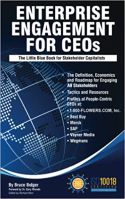
3. Books on implementation: Enterprise Engagement for CEOs and Enterprise Engagement: The Roadmap.
4. Advisory services and research: Strategic guidance, learning and certification on stakeholder management, measurement, metrics, and corporate sustainability reporting.
5. Permission-based targeted business development to identify and build relationships with the people most likely to buy.
Contact: Bruce Bolger at TheICEE.org; 914-591-7600, ext. 230.