

Why Private Equity Should Lead the Next Era of Stakeholder Management
 An industry based on creating new value through greater efficiencies is uniquely positioned to benefit from stakeholder management strategies and tactics that harmonize the interests of all stakeholders toward a common purpose, goals, objectives and values.
 By Bruce Bolger
The Misunderstanding About Stakeholder Management
Why Private Equity Is Well Positioned
Stakeholder Management as a Value Creation Engine
The Enterprise Engagement Perspective
Human Capital: The Largest Unmanaged Asset
Customers and Employees: Two Sides of the Same System
Measurement Is the Difference
Why This Matters at Exit
Can PE Seize the Moment?
Click here to subscribe to the ESM weekly e-newsletter.
What does the private equity (PE) business of NY-based Kohlberg Kravis Roberts & Co. L.P. (KKR) know that most companies in its field overlook? Through employee ownership and other measures, this firm believes that a No. 1 way to create new value in the organizations it purchases is to engage all stakeholders in its purpose, goals, objectives, and values.
Private equity has long been the most disciplined segment of capitalism when it comes to value creation. Unlike public markets, private equity firms live with the consequences of their decisions. They see the full arc of investment—from acquisition through transformation to exit—and they understand that enterprise value is built, not reported.
That is precisely why private equity firms are uniquely positioned to lead the next evolution in stakeholder management—not as a social philosophy, but as a value creation system. Properly understood, stakeholder management is not a departure from private equity’s mission. It is an extension of it.
Given that higher interest rates and greater difficulty selling companies to strategic buyers over the last few years have slowed the industry’s growth, this may be a good time for private equity managers to look at people management as a more sustainable way to enhance the value of the organizations they purchase. After all, up to 60% of an organization’s cash flow goes to employee and marketing expenses, with little of it subject to the same types of Net President Value (NPV) or other metrics commonly used throughout most other areas of business. Companies with highly engaged and loyal stakeholders make better acquisition prospects for strategic buyers.
The Misunderstanding About Stakeholder Management 
A business strategy developed by early management consultants Peter Drucker, W. Edwards Deming and others decades ago was incorrectly framed as a moral or political concept—an alternative to shareholder value rather than a mechanism for achieving it. This framing, created when the Business Roundtable and others in the early 2020s hijacked the term for public relations purposes, has understandably made many investors skeptical.
Stakeholder management, when grounded in enterprise engagement and performance economics, is not about balancing interests for fairness. It is about optimizing the system through which value is created.
Customers, employees, supply partners, distributors, and communities are not external claimants on value. They are the operating system of the enterprise that produces the value. When they are misaligned, disengaged, or depleted, value creation slows, risks compound, and exit multiples suffer. Private equity firms already know this intuitively. What has been missing is a formal, measurable framework for measuring and managing stakeholders as assets rather than abstractions.
Why Private Equity Is Well Positioned
Private equity has three structural advantages over public companies when it comes to stakeholder management.
1. Time horizon. While still finite, PE holding periods allow for investments in productivity, capability building, and cultural alignment that public markets often punish in the short term.
2. Control. PE owners can redesign governance, incentives, operating models, and management systems in ways that diffuse public-company boards cannot.
3. Accountability. Value creation in PE is explicit. Every initiative must ultimately show up in cash flow, growth, resilience, or exit valuation.
These characteristics make private equity the natural proving ground for stakeholder management as a value discipline rather than an ideology.
Stakeholder Management as a Value Creation Engine
At its core, enterprise value is created when an organization consistently converts inputs into outcomes more effectively than its competitors. Stakeholders are not peripheral to this process—they are the process. Consider the most common sources of value leakage in private equity portfolios:
- Customer churn and weak lifetime value
- Employee turnover and long ramp times
- Leadership instability and succession risk
- Operational bottlenecks driven by disengagement
- Cultural degradation following acquisitions or roll-ups
Each of these issues is routinely addressed as an operational or HR problem. In reality, they are stakeholder system failures. Stakeholder management provides a way to integrate these issues into a single value framework—one that aligns purpose, incentives, processes, and measurement around the outcomes that matter most.
The Enterprise Engagement Perspective
Enterprise engagement strategy management reframes stakeholder management as a management system, not a set of programs.
From this perspective, engagement is not a feeling. It is the degree to which stakeholders are aligned, enabled, and motivated to achieve enterprise purpose, goals, objectives, and values. For private equity firms, this means shifting the question from: “How engaged are our employees or customers?” to: “How reliably does this enterprise convert stakeholder effort into measurable results?”
This shift is critical. It moves stakeholder management out of the realm of sentiment and into the realm of performance economics.
Human Capital: The Largest Unmanaged Asset
In most PE-backed companies, human capital (notably customers and employees) are the single largest driver of value—and the least rigorously managed. Customer and employee turnover is often treated as inevitable. Customer service frustration and employee burnout are normalized. Leadership gaps are addressed reactively. Training is rarely evaluated for return on investment. From an engagement standpoint, these are not “people issues.” They are defects in the value creation system.
Enterprises that systematically align roles, incentives, feedback, learning, and leadership around business outcomes consistently outperform those that rely on heroic management or cost cutting alone. For private equity firms, this translates directly into:
- Faster value creation
- Lower execution risk
- More durable EBITDA (Earnings Before Income Tax, Depreciation, and Amortization.)
- Higher-quality exits to strategic partners rather than other private equity firms
Customers and Employees: Two Sides of the Same System
One of the most overlooked insights of stakeholder management is the tight coupling between employee experience and customer outcomes. Disengaged employees do not create loyal customers. Misaligned incentives drive short-term revenue at the expense of long-term value. Cultural decay shows up first in service quality, then in churn, then in valuation.
Private equity firms that manage customer and employee stakeholders as part of a single enterprise engagement system gain earlier warning signals—and greater control—over performance outcomes. This is particularly critical in roll-up strategies, where cultural fragmentation and misaligned incentives quietly erode value long before financial metrics reveal the damage.
Measurement Is the Difference
Stakeholder management only becomes credible when led by a fully engaged CEO and management team with formal impact measurement experience. This does not mean more surveys. It means better alignment between leading indicators and financial outcomes.
Examples include:
- Basic human capital return on investment and value add calculations.
- Revenue, profits, costs per customer and employee.
- Customer and employee retention and documented referrals (surveys are of little value in this regard)
- Time-to-productivity after hiring or acquisition
- Attrition and churn clustered by manager, role, or customer segment
- Capability gaps that constrain growth
- Incentive structures that drive unintended behaviors
Private equity firms excel at financial measurement. Applying the same discipline to stakeholder systems closes one of the largest blind spots in value creation.
Why This Matters at Exit
Ultimately, private equity success is judged at exit. Increasingly, buyers are looking beyond historical EBITDA to assess:
- Sustainability of earnings
- Leadership depth
- Customer loyalty
- Cultural coherence
- Execution resilience
Stakeholder-managed enterprises outperform because their value is less fragile. They are not dependent on a handful of individuals, unsustainable workloads, or extractive practices that unravel post-acquisition. In a world of tighter capital, higher interest rates, and greater scrutiny of operational risk, durability matters.
Can PE Seize the Moment?
Stakeholder management is not a concession to social expectations. It is a next-generation value creation discipline. The challenge is: the subject is not taught anywhere in schools so that senior management have almost no knowledge of the opportunities, strategies, tactics, and impact measures.
Private equity firms that embrace enterprise engagement as a management system—not a messaging exercise—will create stronger companies, reduce execution risk, and achieve superior exits.
The question is not whether stakeholder management belongs in private equity. The question is whether private equity will seize the opportunity to define it correctly—before others define it poorly. If done right, private equity will not be following a trend. It will be setting the standard.
Enterprise Engagement Alliance Services
 Celebrating our 17th year, the Enterprise Engagement Alliance helps organizations enhance performance through:
1. Information and marketing opportunities on stakeholder management and total rewards:
- ESM Weekly on stakeholder management since 2009. Click here to subscribe; click here for media kit.
- RRN Weekly on total rewards since 1996. Click here to subscribe; click here for media kit.
- EEA YouTube channel on enterprise engagement, human capital, and total rewards since 2020
 Management Academy to enhance future equity value for your organization.
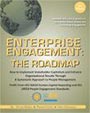
3. Books on implementation: Enterprise Engagement for CEOs and Enterprise Engagement: The Roadmap.
4. Advisory services and research: Strategic guidance, learning and certification on stakeholder management, measurement, metrics, and corporate sustainability reporting.
5. Permission-based targeted business development to identify and build relationships with the people most likely to buy.
Contact: Bruce Bolger at TheICEE.org; 914-591-7600, ext. 230.