

Part 3: Putting the EEI to the Test With Meta
A Sharp Decline Followed by an Even Sharper Recovery
Why the Findings May Matter to Investors and Management
What the Analysis Suggests for 2026 and 2027
A Potentially Important Emerging Indicator
Insights
Click here to subscribe to the ESM weekly e-newsletter.
A preliminary five-year analysis of Meta using the EEA Enterprise Engagement Index (EEI)(TM) suggests that shifts in organizational productivity, profitability, and stakeholder performance may provide early signals of future corporate and shareholder performance. The analysis indicates that Meta’s deterioration in key engagement-performance metrics during 2022 coincided with its dramatic stock decline, while the sharp rebound in those same metrics during 2023–2025 preceded one of the strongest recoveries among major technology companies. This should be considered an interesting signal, and not a definitive conclusion.
The EEI only uses publicly available financial information for scoring public companies. Click here for FAQs.
The analysis suggests Meta’s productivity and stakeholder performance metrics foreshadowed both its stock decline and recovery and may point to trouble ahead. The EEI analysis suggests Meta enters 2026 and 2027 with exceptionally strong operational fundamentals but rising strategic risk tied to massive AI infrastructure investments. If AI monetization scales successfully, Meta could sustain elite productivity and shareholder returns. If infrastructure spending outpaces monetization, the company could experience temporary margin pressure and higher stock volatility despite strong operating performance.
The findings support the premise behind the EEA Enterprise Engagement Index: that organizations able to more effectively convert employee, customer, technology, and stakeholder engagement into measurable financial outcomes may also be better positioned for long-term equity value creation, especially in industries less affected by commodity exposure, geopolitical, regulatory issues, etc.
A Sharp Decline Followed by an Even Sharper Recovery
Meta entered 2022 facing slowing advertising growth, rising competitive pressures, heavy metaverse spending, and a rapidly expanding workforce. Revenue growth stalled while profitability fell sharply. The company’s stock declined more than 64% during the year. The EEI analysis suggests the warning signs were visible inside the operating metrics well before it was reflected by investor sentiment.
The analysis shows that Meta’s weakest period occurred during 2022, when revenue per employee and profit per employee declined significantly as headcount expanded and profitability deteriorated. According to Meta’s SEC filings, the company ended 2022 with more than 86,000 employees while operating income fell sharply from the prior year.
The trend reversed dramatically beginning in 2023 after Meta initiated its widely publicized “year of efficiency.” Head count declined substantially while revenue, margins, and productivity surged. By 2025, revenue per employee had risen to approximately $2.55 million and profit per employee exceeded $1 million.
Why the Findings May Matter to Investors and Management
The preliminary analysis suggests that the EEI may be particularly valuable as an operational early-warning indicator rather than simply a benchmarking tool. The Meta example appears to show that:
- Deteriorating organizational efficiency preceded stock weakness;
- Improving productivity and profitability preceded renewed investor confidence;
- Sustained stakeholder performance may correlate with long-term value creation.
Based on the analysis, Meta now faces a different challenge than it did during 2022. Rather than struggling with slowing growth, the company is investing at extraordinary scale in AI infrastructure, including data centers and computing capacity. Public reports indicate Meta expects capital expenditures in 2026 to rise dramatically as it accelerates its AI strategy.
The EEI analysis suggests that while Meta’s operational fundamentals remain extremely strong, future shareholder performance may increasingly depend on whether these investments generate measurable new revenue streams and productivity gains, as is already widely reported. One key though is how well it manages it customers and employee relationships.
What the Analysis Suggests for 2026 and 2027
The trend analysis points to two possible scenarios.
-
The first is continued operational strength. Revenue per employee, profit per employee, and profitability metrics remain among the strongest in corporate America. If Meta successfully monetizes AI through advertising optimization, commerce, assistants, enterprise tools, and next-generation platforms, the company could continue outperforming peers operationally and financially.
- The second scenario involves increasing investor caution. AI infrastructure spending is becoming extraordinarily capital intensive across the technology sector. Even companies posting strong operational results may experience stock volatility if investors question whether the spending will generate acceptable returns. This probably helps explain the company's recent layoffs.
- Revenue per employee trends;
- Profit per employee trends;
- Margin stability;
- AI monetization efficiency;
- Capital expenditure efficiency; and
- The relationship between infrastructure spending and revenue growth.
A Potentially Important Emerging Indicator
The broader implication of the Meta analysis is that organizational engagement and productivity metrics may provide a more measurable and financially relevant lens on corporate health than traditional employee and customer engagement discussions alone. Rather than focusing solely on culture, morale, or sentiment, the EEI attempts to evaluate how effectively organizations convert stakeholder engagement into tangible economic outcomes, including growth, profitability, and shareholder value creation. Using the EEA’s People Value Impact Calculator, organizations can easily correlate these economic factors with specific strategies and tactics.
If similar patterns continue emerging across industries, the EEA Enterprise Engagement Index could evolve into a framework for executives, investors, analysts, and boards seeking earlier signals of organizational strength—or deterioration—before those trends become fully visible in stock performance.
Preliminary EEI Analysis: Meta Platforms / Facebook, 2021–2025
| Enterprise Engagement Evaluation Factors | 2021 | 2022 | 2023 | 2024 | 2025 |
|---|---|---|---|---|---|
| Revenue per Employee | $1.64M | $1.35M | $2.00M | $2.22M | $2.55M |
| Profit per Employee | $650K | $335K | $694K | $937K | $1.06M |
| HCROI (Proxy) | 2.69x | 1.72x | 2.26x | 2.57x | 2.34x |
| Profitability to Net Income Ratio (Net Income ÷ Revenue) | 33.4% | 19.9% | 29.0% | 37.9% | 30.1% |
| 3-Year Revenue CAGR | 28.3% | 18.1% | 16.2% | 11.8% | 19.9% |
| Final Weighted EEEI Score | 92.0 | 90.0 | 91.8 | 88.1 | 92.0 |
| Stock Performance vs. S&P 500 | META +23% vs S&P +27% | META -64% vs S&P -18% | META +194% vs S&P +26% | META +65% vs S&P +25% | META +13% vs S&P +18% |
Insights
- 2022 was the major warning year: declining revenue efficiency, collapsing profitability, and sharply lower margins coincided with severe stock underperformance.
- 2023–2025 showed a dramatic operational recovery following Meta’s “year of efficiency,” including major improvements in revenue and profit per employee.
- The analysis suggests that changes in organizational productivity and stakeholder performance may have preceded major shifts in shareholder performance.
-
The strongest forward-looking indicators appear to be:
- profit per employee;
- revenue per employee;
- margin stability;
- and the relationship between AI infrastructure spending and future revenue growth.
Enterprise Engagement Alliance Services
 Celebrating our 17th year, the Enterprise Engagement Alliance helps organizations enhance performance through:
1. Information and marketing opportunities on stakeholder management and total rewards:
- ESM Weekly on stakeholder management since 2009. Click here to subscribe; click here for media kit.
- RRN Weekly on total rewards since 1996. Click here to subscribe; click here for media kit.
- EEA YouTube channel on enterprise engagement, human capital, and total rewards since 2020
 Management Academy to enhance future equity value for your organization.
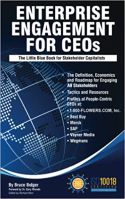
3. Books on implementation: Enterprise Engagement for CEOs and Enterprise Engagement: The Roadmap.
4. Advisory services and research: Strategic guidance, learning and certification on stakeholder management, measurement, metrics, and corporate sustainability reporting.
5. Permission-based targeted business development to identify and build relationships with the people most likely to buy.
Contact: Bruce Bolger at TheICEE.org; 914-591-7600, ext. 230.