

Engagement Careers Span HR, Customer Loyalty and Channel Partnerships
Employee Engagement: Turning Feedback Into Action
Customer Engagement: Earning the Next Interaction
Channel Engagement: Helping Partners Succeed
What Skills Do Employers Seek?
What Does it Pay?
How to Find a Way In
Click here to subscribe to the ESM weekly e-newsletter.
A search for an “engagement job” can lead to an employee recognition program, a customer loyalty team or a function in sales engagement. The titles vary because the people being engaged vary. What connects the work is the need to understand what people value, design useful experiences, coordinate the teams that deliver them and measure whether relationships and results improve. Recent openings show what these professionals actually do; federal wage data offers a guide to pay, though its broad occupational categories do not correspond exactly to engagement job titles.
Click here to check out opportunties on the EEA's Engagement Job Board.
Employee Engagement: Turning Feedback Into Action
 Employee engagement roles commonly sit in HR, people experience, internal communications or organizational development. A coordinator might organize listening sessions, recognition activities and employee events. A manager may run surveys, help leaders respond to the findings and track whether changes improve retention or the employee experience. A director is more likely to set strategy across the organization and connect culture, communications, leadership practices and recognition to business priorities.
The range is visible in recent openings. A Senior Team Member Engagement Coordinator at Schnellecke Logistics USA is tasked with using employee feedback and retention data to improve recognition, communications and leaders’ follow-up on concerns. The NY Metropolitan Transportation Authority’s Senior Director of Employee Engagement and Recognition role covers engagement and recognition throughout the employee lifecycle. These are different levels of responsibility, but both require more than putting on events: the employer expects someone to learn what is happening, involve managers and improve the employee’s experience.
Customer Engagement: Earning the Next Interaction
Customer engagement jobs appear under titles such as loyalty analyst, lifecycle marketing manager, customer experience manager and customer success manager. The daily work may include studying customer behavior, improving onboarding, designing relevant communications and offers, resolving points of friction or managing a loyalty program. Success can be measured through participation, repeat purchases, retention and customer value.
For example, a JetBlue Senior Analyst, Loyalty Engagement opening describes work on targeted offers, personalization and member experiences for its TrueBlue program. A Mohawk Industries Director, Loyalty & Customer Engagement opening places greater emphasis on strategy, customer journeys, outside partners and program returns. Someone entering this field might begin by analyzing campaigns and customer behavior, then progress toward designing and managing the full relationship.
Channel Engagement: Helping Partners Succeed
Channel professionals work with distributors, dealers, agents, franchisees and other companies that sell or represent an organization’s products. The job may be called channel partnerships, partner experience, dealer development or sales incentives. Much of the work involves understanding what partners need to serve customers well: training, timely information, workable processes, support from sales teams and incentives that reward the right outcomes.
The Paychex Channel Partnerships Director opening focuses on developing partner relationships, coaching sales teams and generating referrals. At GEICO, a Director of Sales Incentive Compensation opening addresses incentives, recognition, communications and measurement for its independent-agent channel. Channel work is therefore both relational and analytical: professionals must earn partners’ participation while showing whether a program improves performance.
What Skills Do Employers Seek?
Across the three paths, employers repeatedly ask for clear writing and communication, the ability to listen and interpret feedback, comfort with data, program management and the ability to work across departments. An employee engagement specialist may need to persuade managers to act on survey findings. A loyalty analyst must turn customer data into useful offers. A channel manager has to align sales, marketing, operations and independent partners around a program that works in practice.
The more senior the role, the more important financial judgment becomes. Professionals need to explain what a program costs, what it is meant to change and how they will assess the result. Specific tools differ by employer—survey platforms, customer relationship systems, loyalty platforms and analytics software—but the transferable skill is knowing which problem the tool is supposed to solve.
What Does it Pay?
A review of current jobs from the EEA Engagement Job Boards finds a few concrete examples of pay ranges:
| Job Board Examples | Posted Annual Pay |
|---|---|
| MTA — Senior Director, Employee Engagement & Recognition | $145,615–$170,000 |
| JetBlue — Senior Analyst, Loyalty Engagement | $88,000–$132,000 base pay |
| GEICO — Director, Independent-Agent Sales Incentive Compensation | $121,975–$229,600 base pay |
There is no single government wage category for “engagement professional.” As a guide, the US Bureau of Labor Statistics reported these national median annual wages for related occupations in May 2025:
| Related occupation | Median annual wage |
|---|---|
| Training and development specialists | $69,280 |
| Human resources specialists | $75,940 |
| Market research analysts, marketing specialists | $78,760 |
| Training and development managers | $133,000 |
| Sales managers | $148,270 |
| Human resources managers | $149,280 |
These figures describe broad occupations, not salary promises for the openings cited here. An individual engagement job’s pay will depend on its scope, industry, location and level of responsibility. Channel and sales roles may also include incentive compensation that requires separate consideration.
How to Find a Way In
People can enter engagement work from HR, communications, marketing, customer service, sales, learning and development or data analysis. The useful first step is to choose whom you want to work with—employees, customers or partners—and then search the related titles as well as “engagement.” A prospective employee engagement specialist could build experience with surveys and action planning; a customer engagement candidate with customer journeys and retention analysis; and a channel candidate with partner operations and incentive programs.
The strongest preparation combines an understanding of people with evidence that you can run a program and improve it. In an interview, an account of a campaign, survey or partnership is more persuasive when it explains the problem, what you changed and what happened afterward. That is the common thread across these careers: engagement professionals help organizations turn an intention to build better relationships into work people can experience and results the organization can examine.
Enterprise Engagement Alliance Services
 Celebrating our 18th year, the Enterprise Engagement Alliance helps organizations enhance performance through:
1. Information and marketing opportunities on stakeholder management and total rewards:
- ESM Weekly on stakeholder management since 2009. Click here to subscribe; click here for media kit.
- RRN Weekly on total rewards since 1996. Click here to subscribe; click here for media kit.
- EEA YouTube channel on enterprise engagement, human capital, and total rewards since 2020
 Management Academy to enhance future equity value for your organization.
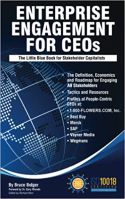
3. Books on implementation: Enterprise Engagement for CEOs and Enterprise Engagement: The Roadmap.
4. Advisory services and research: Strategic guidance, learning and certification on stakeholder management, measurement, metrics, and corporate sustainability reporting.
5. Permission-based targeted business development to identify and build relationships with the people most likely to buy.
Contact: Bruce Bolger at TheICEE.org; 914-591-7600, ext. 230.